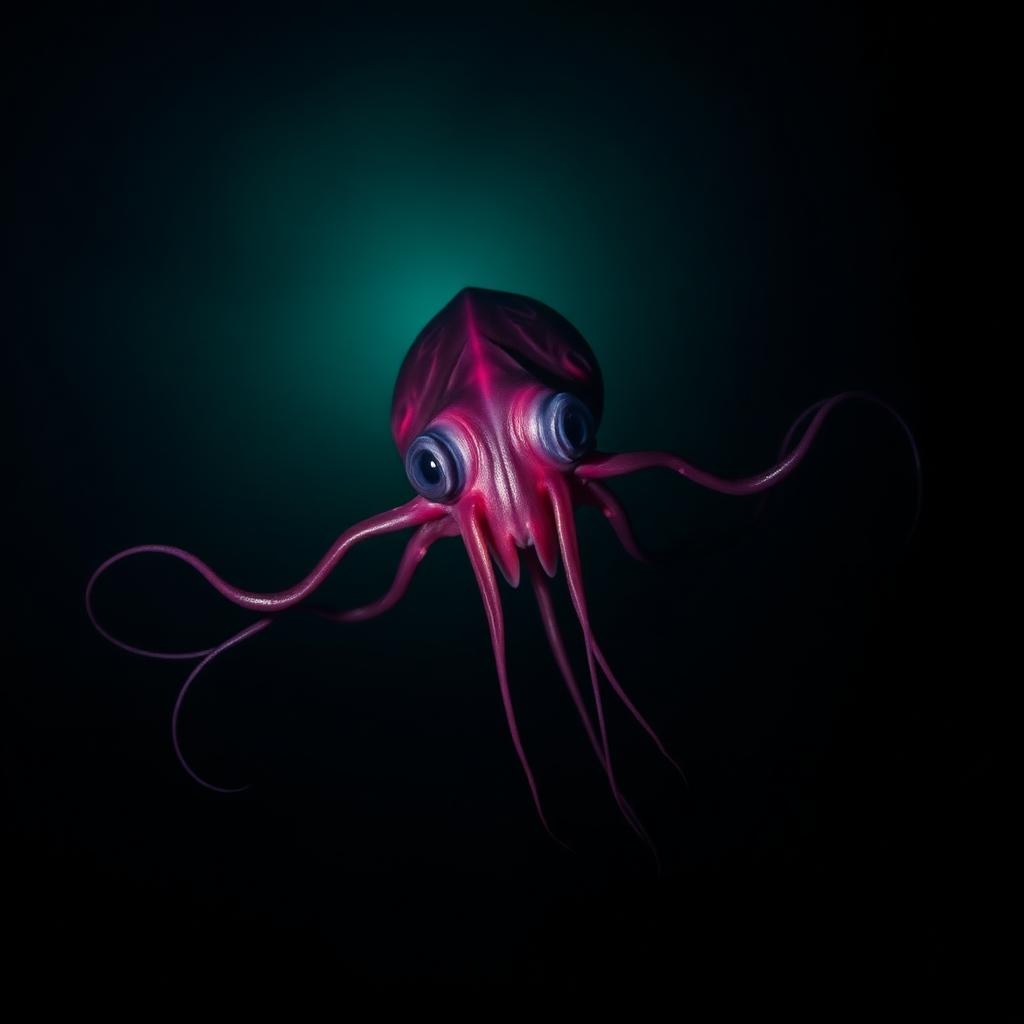
Vampyroteuthis infernalis: The Cephalopod That Is Neither Squid Nor Octopus
A gentle detritivore that has survived nearly unchanged for hundreds of millions of years
The vampire squid, Vampyroteuthis infernalis, occupies a taxonomic niche of its own. It is neither a true squid nor a true octopus. It is the last surviving member of the order Vampyromorphida, a lineage that split from other cephalopods roughly three hundred million years ago. Its scientific name translates roughly as vampire squid from hell, but the animal itself is one of the calmest and least aggressive cephalopods known.
Adults reach around thirty centimeters in total length. The body is deep red to purple, with large blue eyes that appear disproportionately big relative to the head. Eight arms are joined by a webbed cloak that gives the animal its distinctive silhouette. Two additional filaments, longer than the arms themselves, can be extended into the surrounding water to detect drifting particles. The animal lives in oxygen-minimum zones between about six hundred and one thousand two hundred meters, where dissolved oxygen levels are so low that most active predators cannot survive.
For most of the twentieth century, biologists assumed the vampire squid was a predator similar to other cephalopods. Direct observation from submersibles and long-term captive study eventually overturned that view. Instead of hunting prey, the animal extends its filaments into the water column and passively captures marine snow. When enough particles have accumulated, it draws the filaments through cilia on its arms, packs the material into mucus balls, and eats them. It is one of the very few cephalopods known to feed on detritus rather than living prey.
The animal's low-oxygen habitat requires unusually efficient metabolism. Its blood contains hemocyanin adapted to bind oxygen at very low partial pressures. Its muscles are soft and slow, using minimal energy. Even its escape response is comparatively gentle. When threatened, the vampire squid inverts its webbed arms around its body, exposing rows of soft, harmless-looking spines called cirri. In deeper distress, it releases a cloud of bioluminescent mucus instead of ink and drifts away in the confusion.
Reproduction in Vampyroteuthis is slow and unusual. Females may store sperm from a single mating for long periods and produce successive small clutches of eggs across their adult lives. Juveniles pass through several distinct morphological stages, changing body shape as they mature. The full life cycle probably takes years, though precise estimates are difficult because the animal is so rarely encountered.
Because it lives in oxygen-minimum zones that are expanding in many ocean regions as a result of climate change, the vampire squid may actually benefit from certain aspects of environmental change. Some researchers hypothesize that its ancient lineage has persisted for so long precisely because it specialized in low-oxygen habitats that other animals cannot use. If deoxygenation continues, its habitat may expand while other species retreat.
The vampire squid is also a reminder that the deep sea preserves evolutionary history. Many midwater species belong to lineages that have changed slowly for tens or hundreds of millions of years. Studying them provides a window into cephalopod evolution before the rise of the fast-swimming, high-metabolism squids and the tool-using octopuses that dominate popular attention today. In that sense, Vampyroteuthis is more than a curiosity; it is a living document of a much older ocean.
It is difficult not to feel affection for an animal whose fearsome name is so profoundly unearned. The vampire squid is small, quiet, harmless to humans, and beautifully adapted to a very specific kind of ocean. It is exactly the kind of species that makes the case for careful, curiosity-driven exploration of the deep sea.
Despite its dramatic name, the vampire squid is a slow, delicate animal that feeds on marine snow rather than blood, and it belongs to its own ancient order.
Continue reading
 Deep Sea Species Gallery
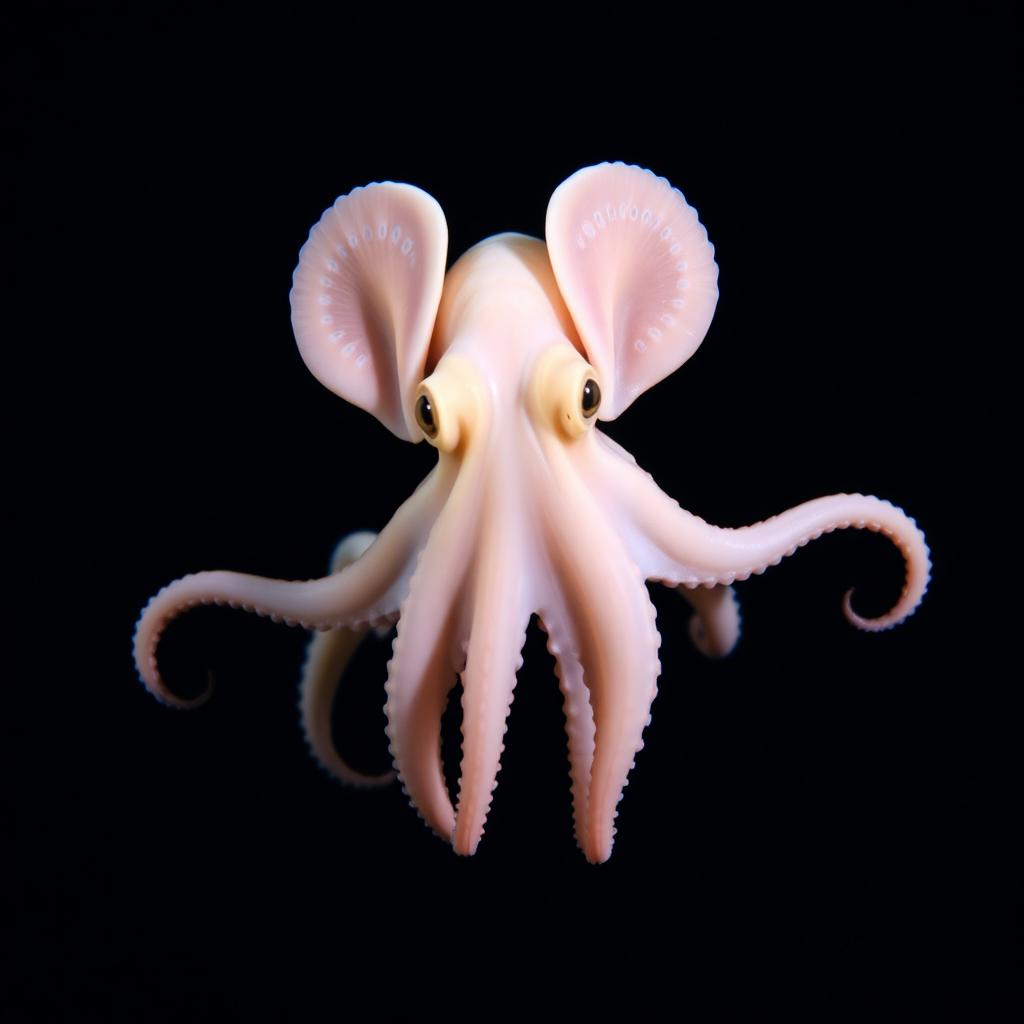
Dumbo Octopus: The Deep's Gentle Wanderer
Grimpoteuthis species that flap through the abyss on ear-like fins
 Deep Sea Species Gallery
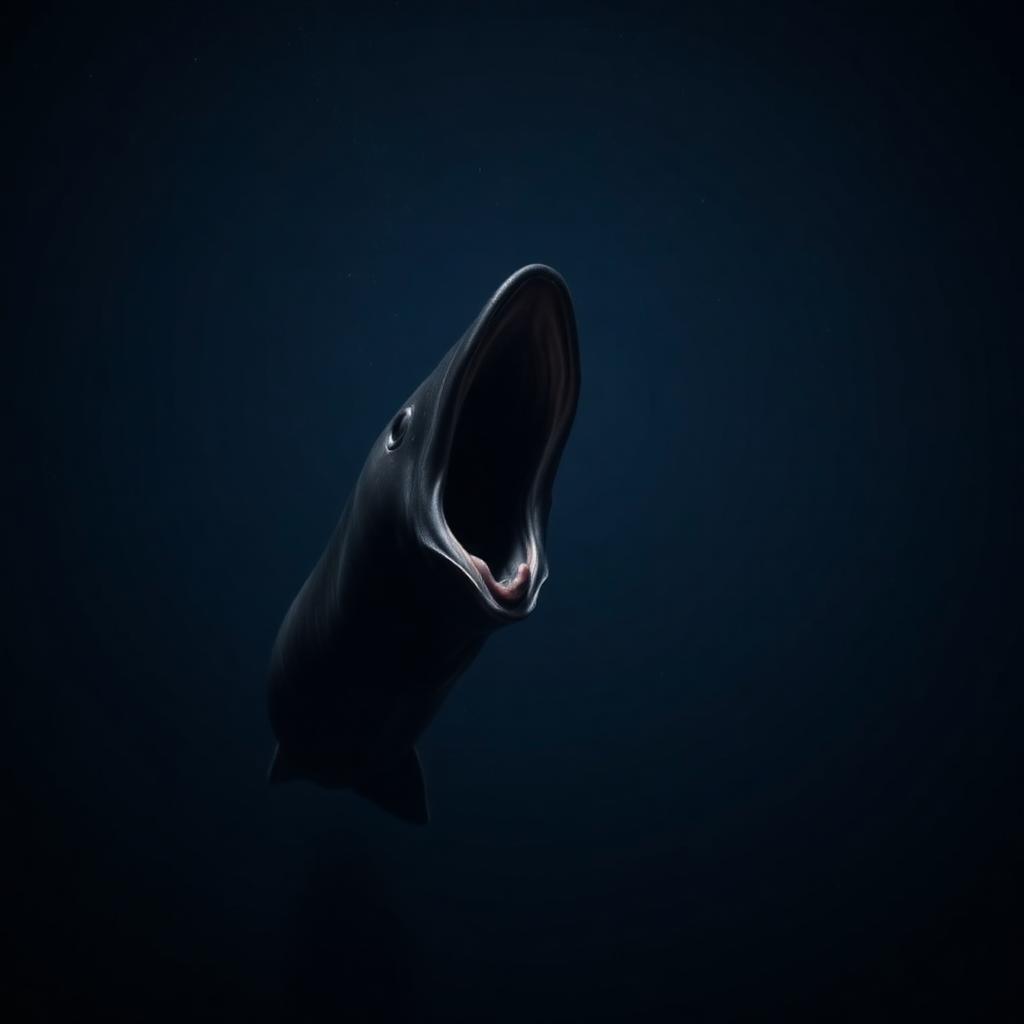
Gulper Eel: A Living Fishing Net
Eurypharynx pelecanoides and the anatomy of extreme swallowing
 Deep Sea Species Gallery
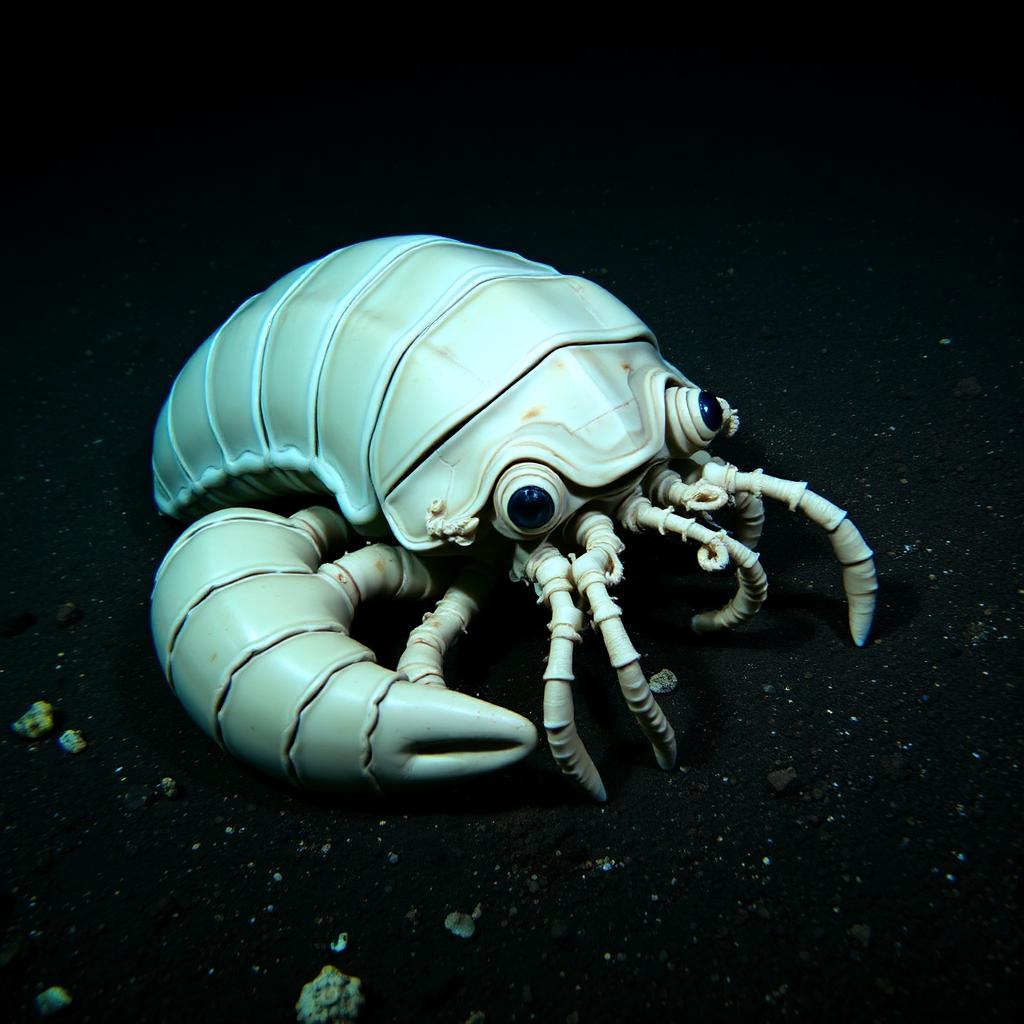
Giant Isopod: The Deep Sea's Armored Scavenger
Bathynomus species and the biology of deep-sea gigantism