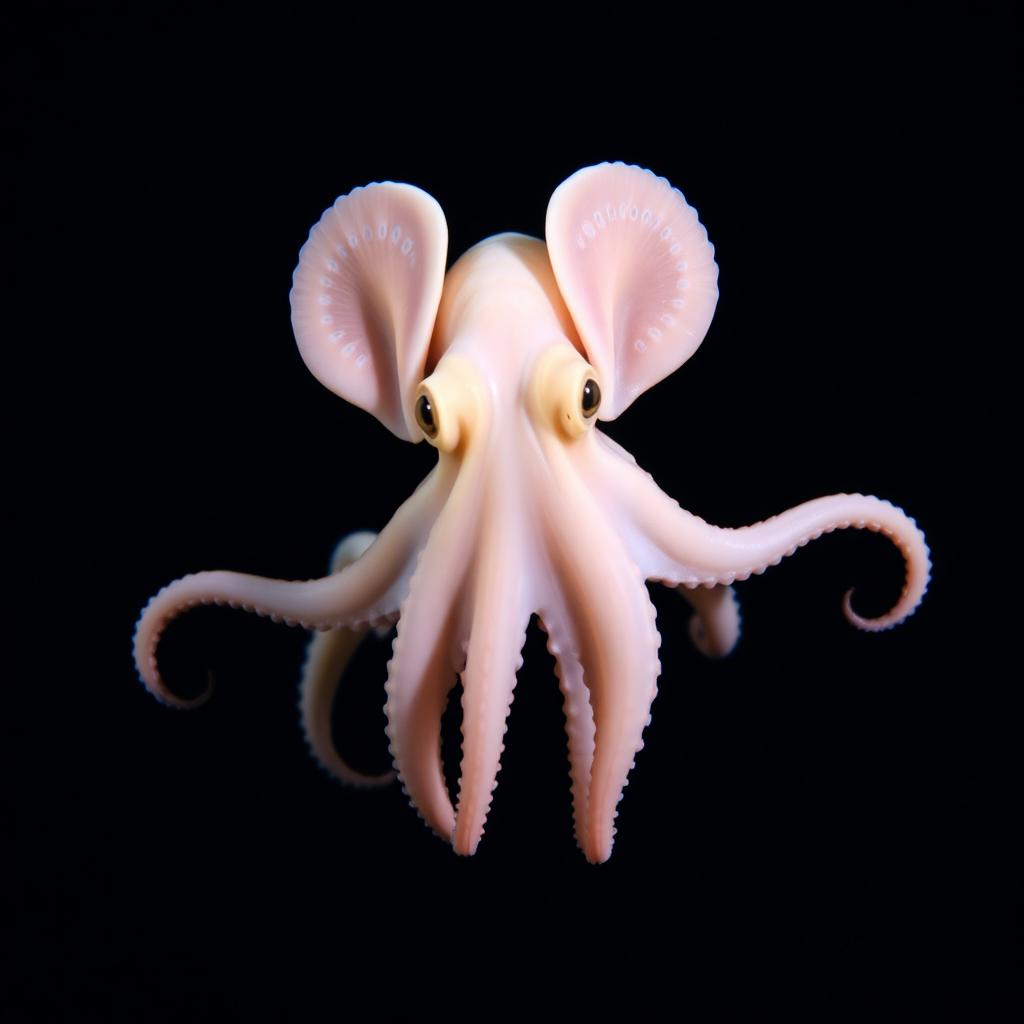
Dumbo Octopus: The Deep's Gentle Wanderer
Grimpoteuthis species that flap through the abyss on ear-like fins
The name dumbo octopus refers to any of roughly a dozen species in the genus Grimpoteuthis. They are among the deepest-dwelling octopuses known, with confirmed records at depths beyond six thousand meters. Adults range from a few centimeters to roughly a meter across, and their most distinctive feature is a pair of soft fins that project above the head like the ears of a certain cartoon elephant.
Unlike shallow-water octopuses, dumbo octopuses swim primarily by flapping these fins rather than by jetting water through a funnel. This mode of movement is slow but energy efficient, which suits an environment where food is scarce. When startled, they can also use their arms as a webbed umbrella to make short bursts of movement, but they rarely display the darting behavior of their coastal cousins.
Dumbo octopuses feed on small crustaceans, worms, and other invertebrates that they find on or near the seafloor. Unlike many octopuses, they typically swallow prey whole, using a modified digestive system to break it down internally. This is another adaptation to a low-food environment: fewer opportunities are missed if a prey item can be consumed quickly without complex manipulation.
Reproduction is unusual for octopuses. Rather than producing a single large batch of eggs and dying shortly afterward, some dumbo octopus species appear to release eggs continuously across their adult lives. Females attach eggs one at a time to rocks, sponges, or corals on the seafloor, where the eggs develop slowly in cold, stable conditions. Hatchlings emerge already well developed, capable of independent life almost immediately.
Because they are relatively slow, curious animals with soft bodies, dumbo octopuses have been recorded on video during many deep-submersible expeditions. Footage from the Pacific, Atlantic, and Indian Oceans has captured them drifting near the seafloor, occasionally settling to feed, and sometimes interacting briefly with instruments. They rarely show alarm at submersibles, which allows extended observation and detailed measurement.
Deep-sea biologists value dumbo octopuses partly because they represent a very different lifestyle from the fast, intelligent shallow-water octopuses that dominate popular attention. They demonstrate that the cephalopod body plan can be adapted to a wide range of conditions, including some of the most extreme in the ocean, and that slow, deliberate lives are as valid an evolutionary strategy as rapid, energetic ones.
For the general reader, dumbo octopuses are also simply charming. They move in a fluttering, purposeful way that looks almost intentional, and their color changes and posture shifts are visible even in the low-light conditions of deep-submersible video. They remind us that the deep sea is not only strange and forbidding but also full of animals whose behavior invites patient watching.
Formal taxonomy of Grimpoteuthis is still evolving. Several new species have been described in recent years, and genetic analyses suggest additional cryptic species yet to be formally recognized. Each new expedition has the potential to add another member to this quiet, fluttering group of deep-sea residents.
Dumbo octopuses are among the deepest-living cephalopods. Their soft bodies, fin-driven swimming, and quiet lives illustrate a different kind of octopus biology.
Continue reading
 Deep Sea Species Gallery
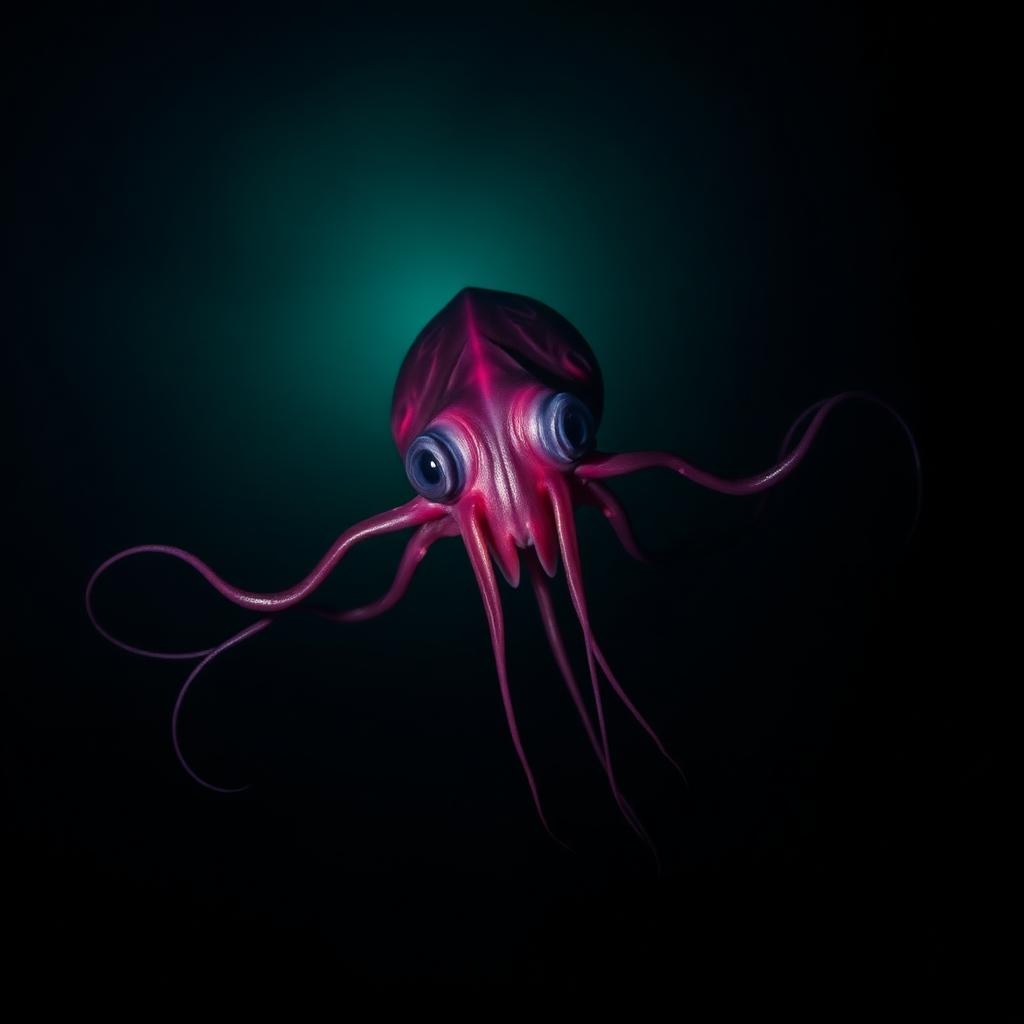
Vampyroteuthis infernalis: The Cephalopod That Is Neither Squid Nor Octopus
A gentle detritivore that has survived nearly unchanged for hundreds of millions of years
 Deep Sea Species Gallery
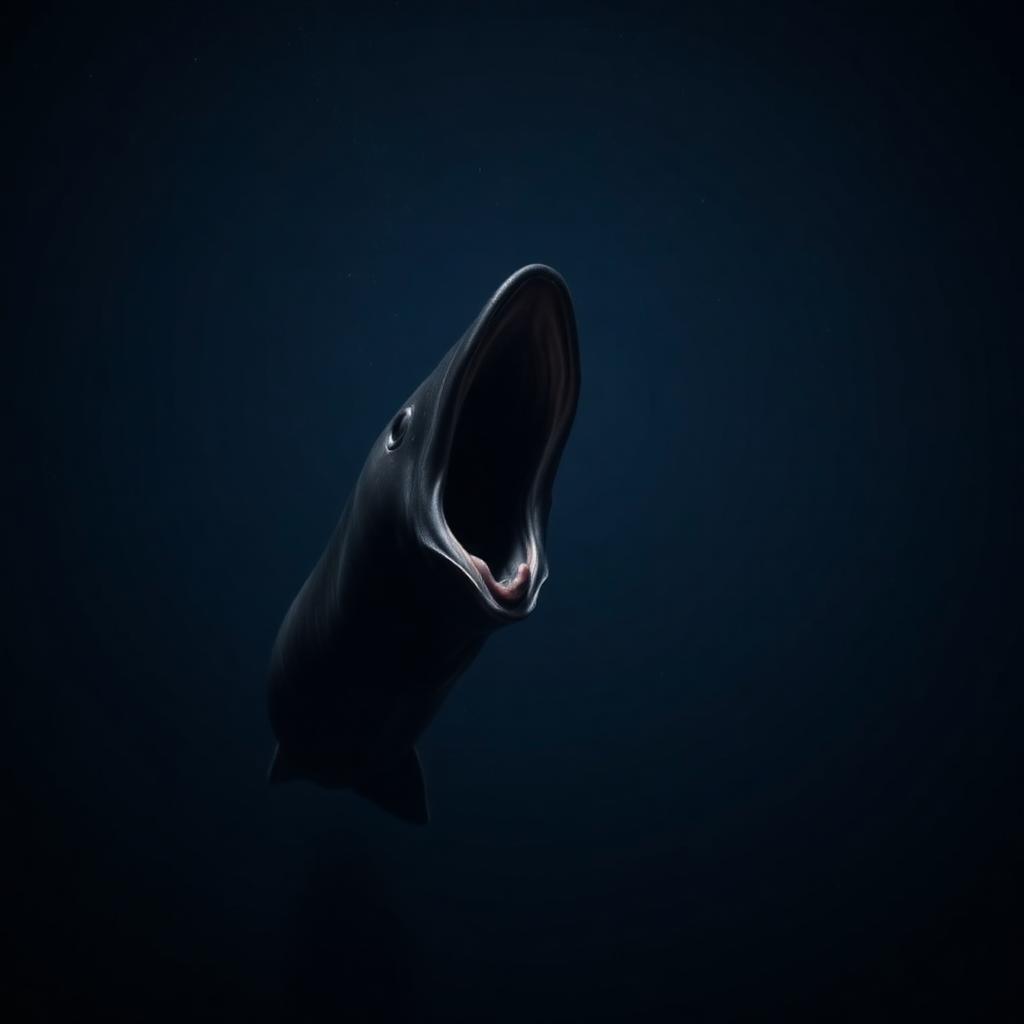
Gulper Eel: A Living Fishing Net
Eurypharynx pelecanoides and the anatomy of extreme swallowing
 Deep Sea Species Gallery
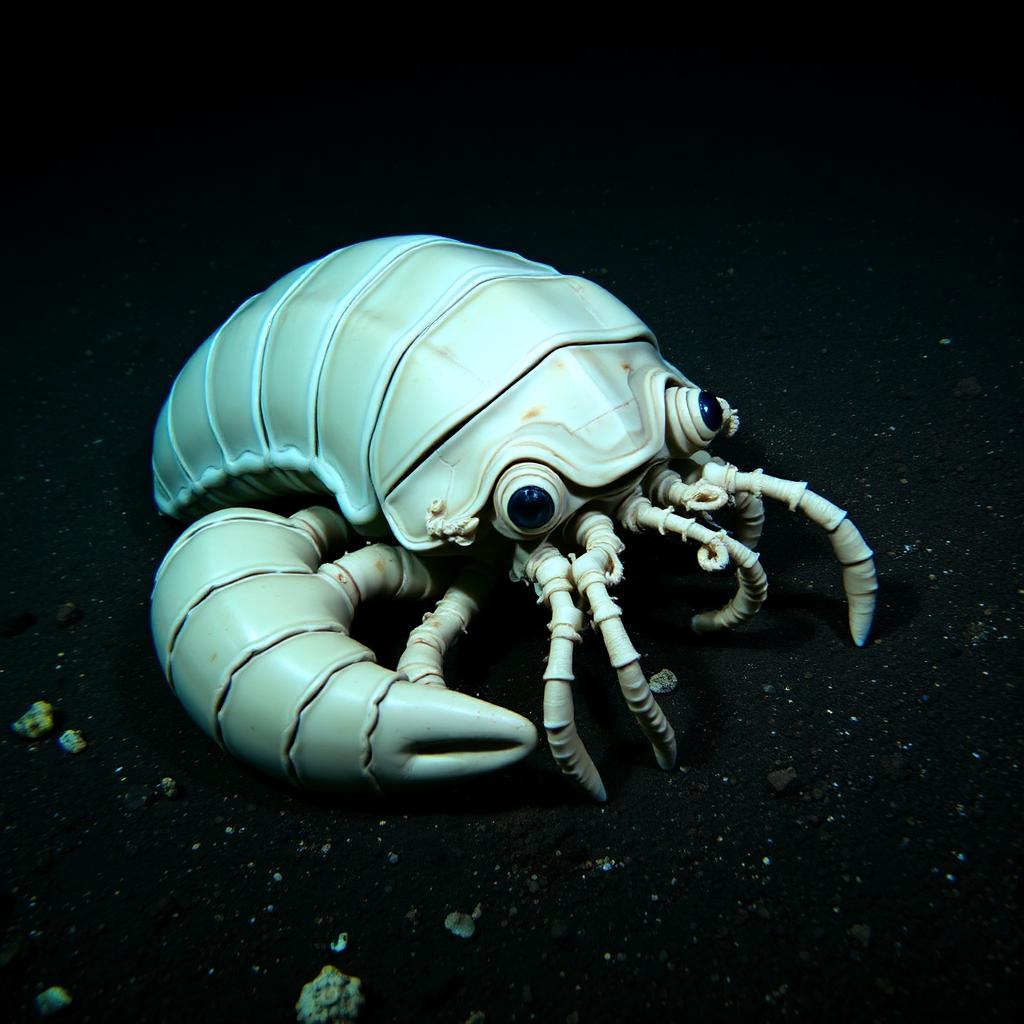
Giant Isopod: The Deep Sea's Armored Scavenger
Bathynomus species and the biology of deep-sea gigantism