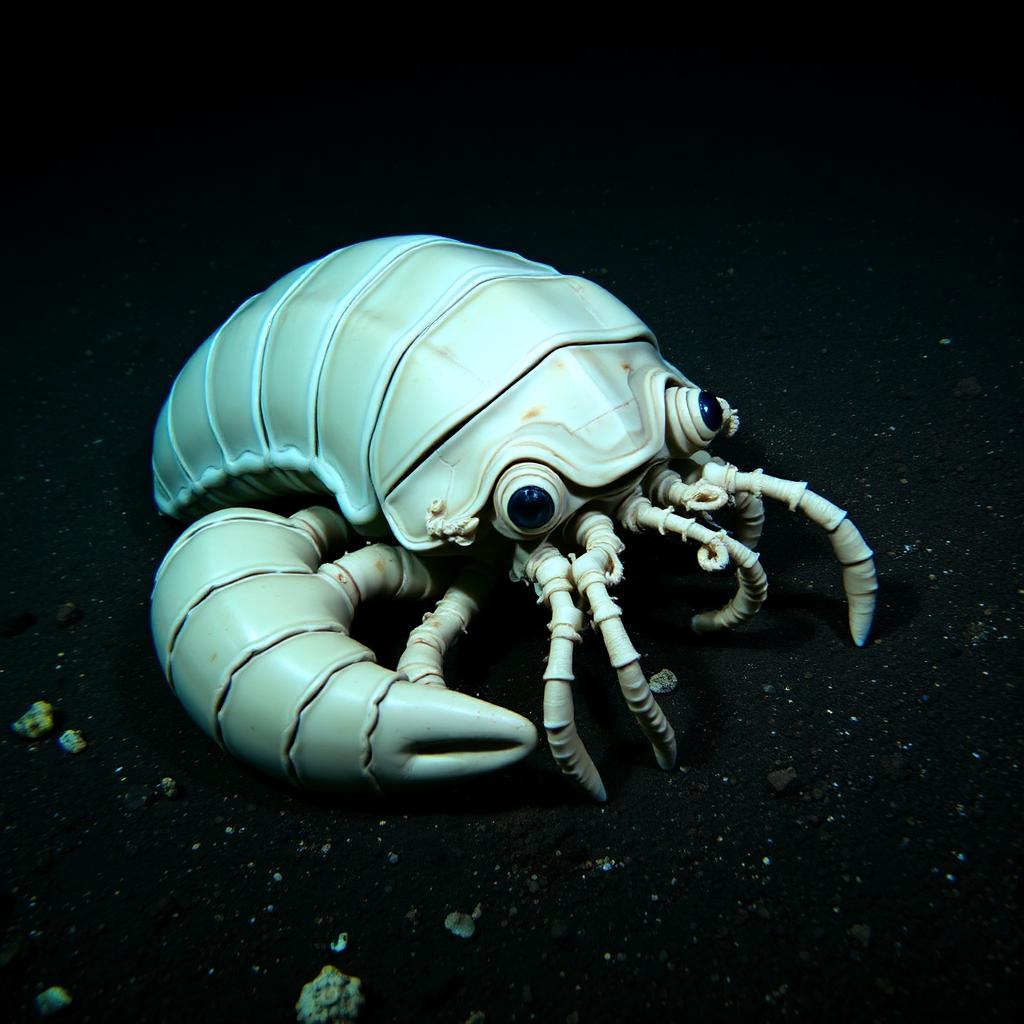
Giant Isopod: The Deep Sea's Armored Scavenger
Bathynomus species and the biology of deep-sea gigantism
Giant isopods of the genus Bathynomus are among the most immediately recognizable deep-sea invertebrates. They resemble oversized versions of the pill bugs found in gardens, sometimes reaching lengths of over fifty centimeters. Several species are known, distributed across deep waters in the Atlantic, Pacific, and Indian Oceans at depths between roughly one hundred and two thousand meters.
The most famous species, Bathynomus giganteus, was formally described in 1879 based on specimens collected in the Gulf of Mexico. Its size shocked contemporary naturalists and became one of the classic examples of deep-sea gigantism. Modern research has expanded the genus to include multiple species, with some recent additions from the Indo-Pacific reaching or exceeding the historical record.
Giant isopods are opportunistic scavengers. They gather in large numbers around whale carcasses and other food falls, sometimes appearing within hours of a bait deployment. Their armored bodies protect them from most predators, and their strong mandibles can break apart tough tissues that other scavengers cannot handle. When food is unavailable, they can survive extended fasts, with some captive individuals living more than four years without eating.
Their slow metabolism is a defining feature. Growth is gradual, and molting cycles can span months. Reproduction appears to be similarly deliberate, with females carrying eggs for extended periods in specialized brood pouches. Life spans, though difficult to measure directly, likely reach several decades in the wild. This slow biology aligns with the low food availability and stable conditions of their deep-sea habitat.
In captivity, giant isopods have become popular exhibits at some public aquariums. They are hardy, undemanding, and visually striking, which makes them effective ambassadors for deep-sea life. Their tendency to remain motionless for long periods, punctuated by sudden bursts of activity, provides a compact demonstration of the boom-and-bust rhythms typical of deep-sea scavengers.
For scientists, giant isopods offer an accessible model for studying deep-sea physiology. Their size makes tissue sampling and instrumentation straightforward, and their tolerance of laboratory conditions allows long-term experimental work. Studies of their metabolism, sensory systems, and immune responses have contributed to broader understanding of how animals adapt to low-energy, high-pressure environments.
Conservation status is generally not a major concern, though some species are captured incidentally in deep-water fisheries. Their slow reproduction means that populations could recover only slowly from significant disturbance, and long-term monitoring is limited. As deep-sea fisheries expand in some regions, giant isopod populations may warrant more focused attention.
In galleries of deep-sea life, giant isopods reliably attract fascinated audiences. Their combination of familiar body plan and extraordinary size makes them approachable yet impressive. They provide an easy entry point into conversations about the diversity of the deep sea, and about how ordinary evolutionary processes can produce extraordinary results when they operate in unusual environments.
Giant isopods are among the largest crustaceans in the deep sea. Their size, longevity, and slow metabolism make them icons of abyssal adaptation.
Continue reading
 Deep Sea Species Gallery
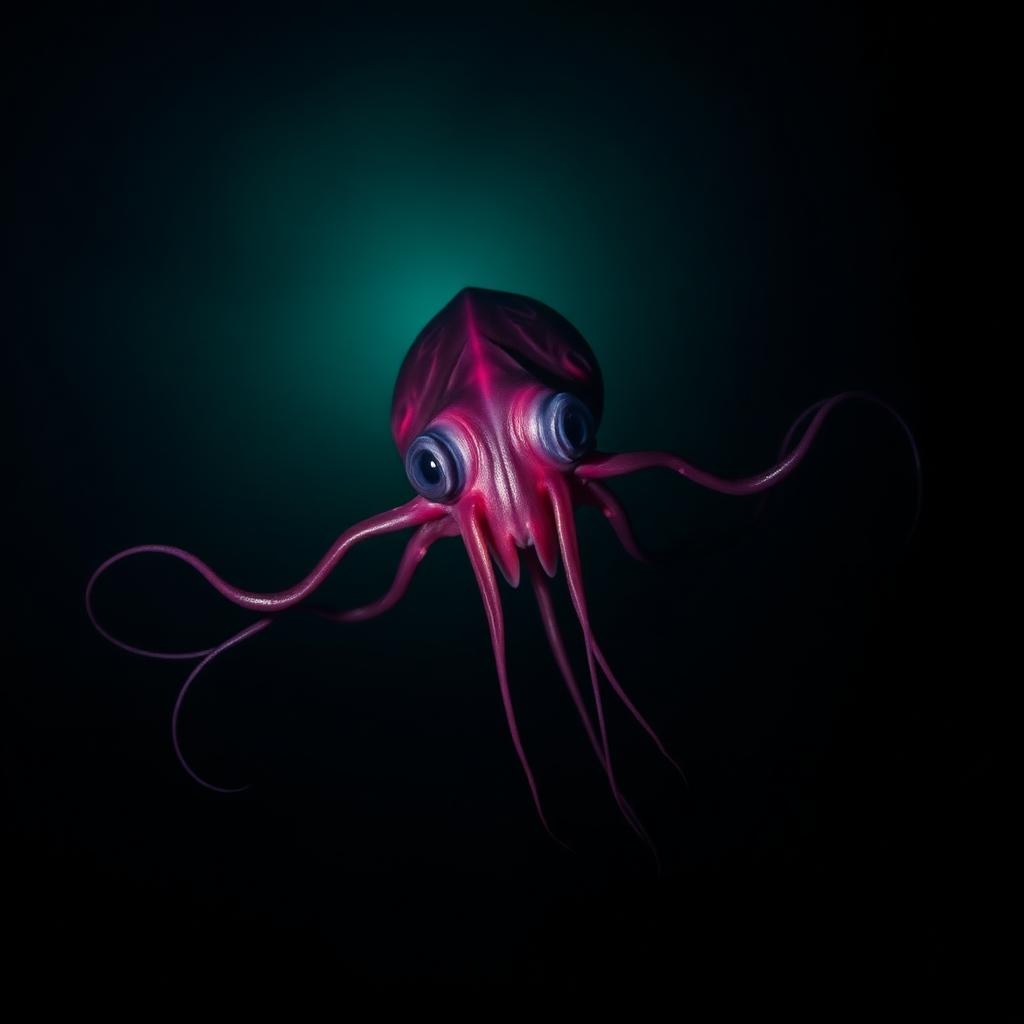
Vampyroteuthis infernalis: The Cephalopod That Is Neither Squid Nor Octopus
A gentle detritivore that has survived nearly unchanged for hundreds of millions of years
 Deep Sea Species Gallery
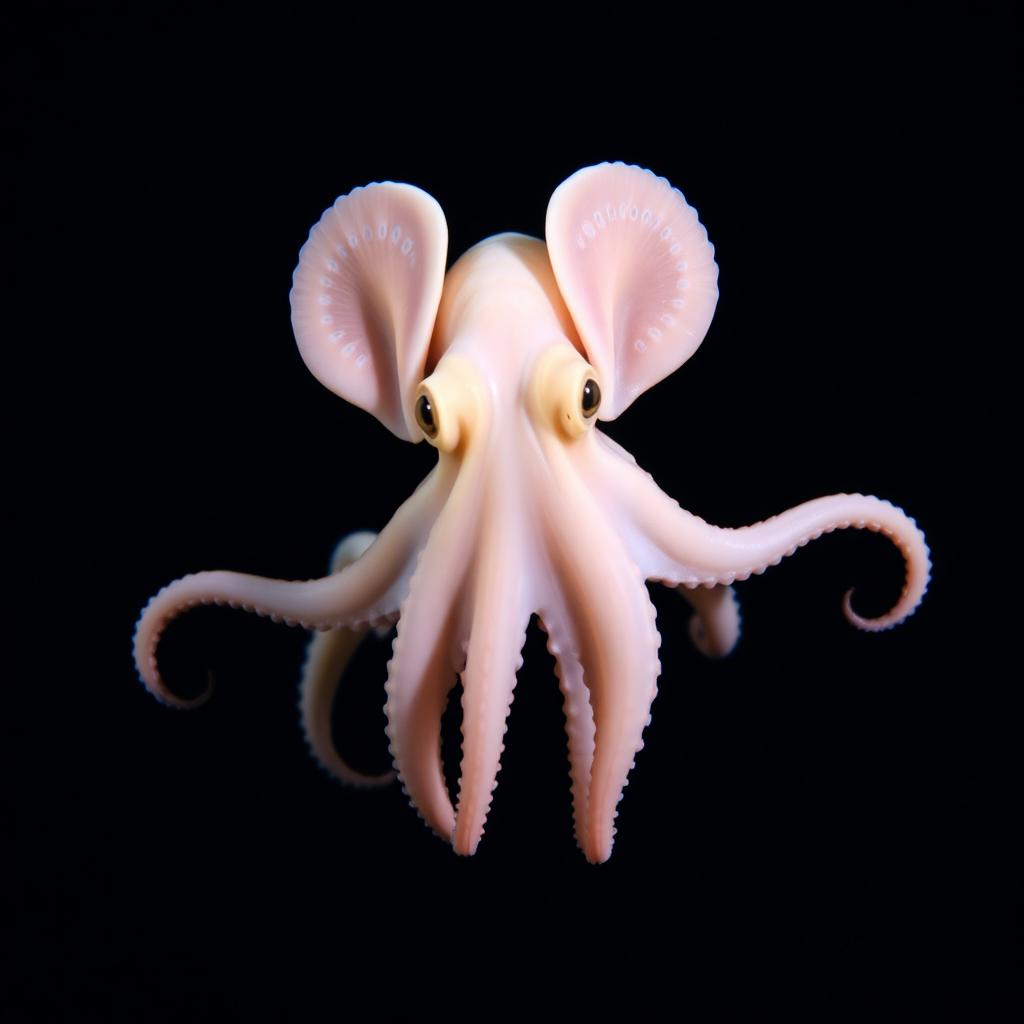
Dumbo Octopus: The Deep's Gentle Wanderer
Grimpoteuthis species that flap through the abyss on ear-like fins
 Deep Sea Species Gallery
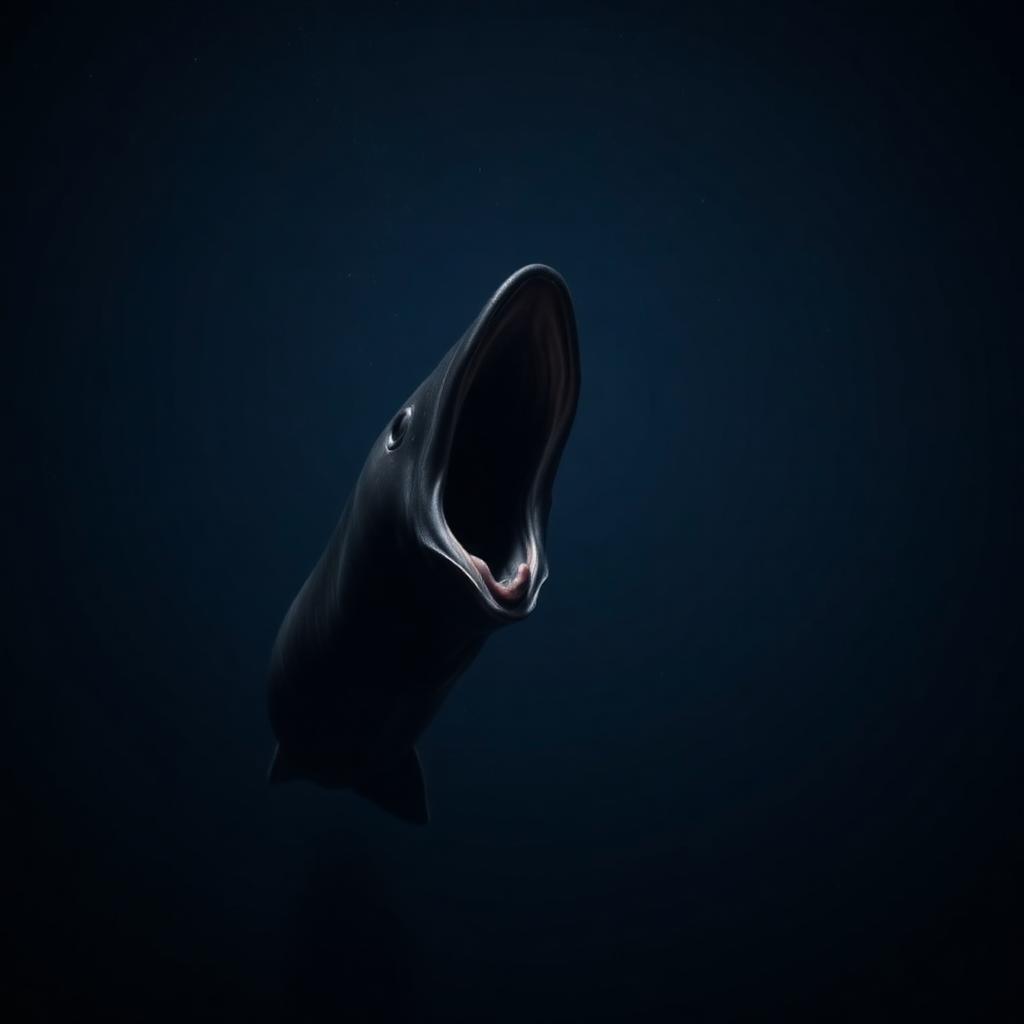
Gulper Eel: A Living Fishing Net
Eurypharynx pelecanoides and the anatomy of extreme swallowing