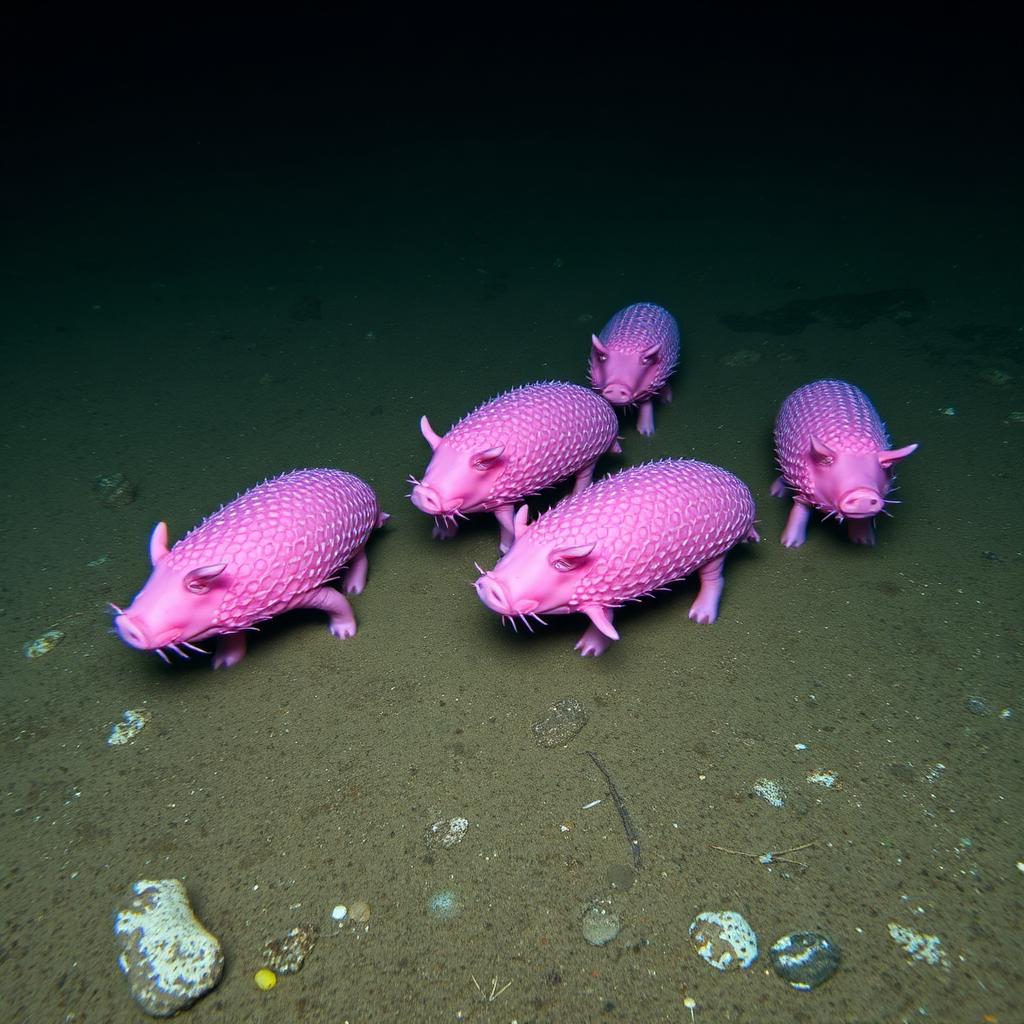
Sea Pigs: The Pink Herds of the Abyssal Plain
Why holothurians of the genus Scotoplanes gather in large groups on the deep seafloor
Sea pigs, members of the sea cucumber genus Scotoplanes, are among the strangest and most numerous large animals on the abyssal plain. Their soft, plump pink bodies rest on rows of tube feet that function like tiny legs, and they gather in loose herds that slowly graze the seafloor for organic detritus. In some deep basins they are so abundant that hundreds can appear in a single ROV transect.
Scotoplanes species live at depths between about a thousand meters and more than six thousand meters. They feed by using specialized tube feet around their mouths to sort through sediment, extracting bacteria, dead plankton, and other organic particles. Because they specialize in freshly fallen material, sea pigs tend to congregate wherever marine snow accumulates, which explains their patchy but locally dense distributions.
One of the more surprising discoveries about sea pigs is their tendency to gather around large food falls. When a whale carcass or a mass of dead algae reaches the abyssal plain, sea pigs often arrive in numbers within days. They do not compete directly with the specialized bone-eating worms and hagfish that dominate whale falls, but they process the wider organic halo that spreads across the surrounding sediment.
Sea pigs also serve as mobile habitat for other animals. Juvenile king crabs of certain species have been observed clinging to sea pigs, apparently using them as protection from predators. Some parasitic gastropods live permanently attached to the sea pig's body, feeding on its tissues without killing the host. These small relationships hint at a broader web of interactions that is still poorly understood.
Distribution surveys suggest that sea pig populations may be sensitive to sediment disturbance from deep-sea mining. Their reliance on freshly fallen organic material means that plumes of resuspended sediment could bury food resources or clog their delicate feeding structures. Baseline studies of sea pig density are now considered important indicators for any future monitoring of mined and unmined abyssal areas.
Because Scotoplanes bodies are almost entirely water, they collapse into unrecognizable shapes when brought to the surface. Most of what scientists know about their behavior comes from ROV video collected during long transects across the abyssal plain. This kind of visual survey is time-consuming but has revealed patterns of herd movement, spacing, and orientation that would be invisible to any net-based sampling.
For readers who imagine the deep-sea floor as a lifeless desert, sea pigs are a useful corrective. They are neither rare nor mysterious in the way that giant squids and anglerfishes are. They are ordinary, abundant, and everywhere. Their slow pink herds are one of the true faces of the abyssal plain, quietly turning marine snow into the base of a much larger food web.
Scotoplanes sea pigs are among the most numerous large animals on the abyssal seafloor, gathering in slow-moving herds that process organic detritus.
Continue reading
 Deep Sea Species Gallery
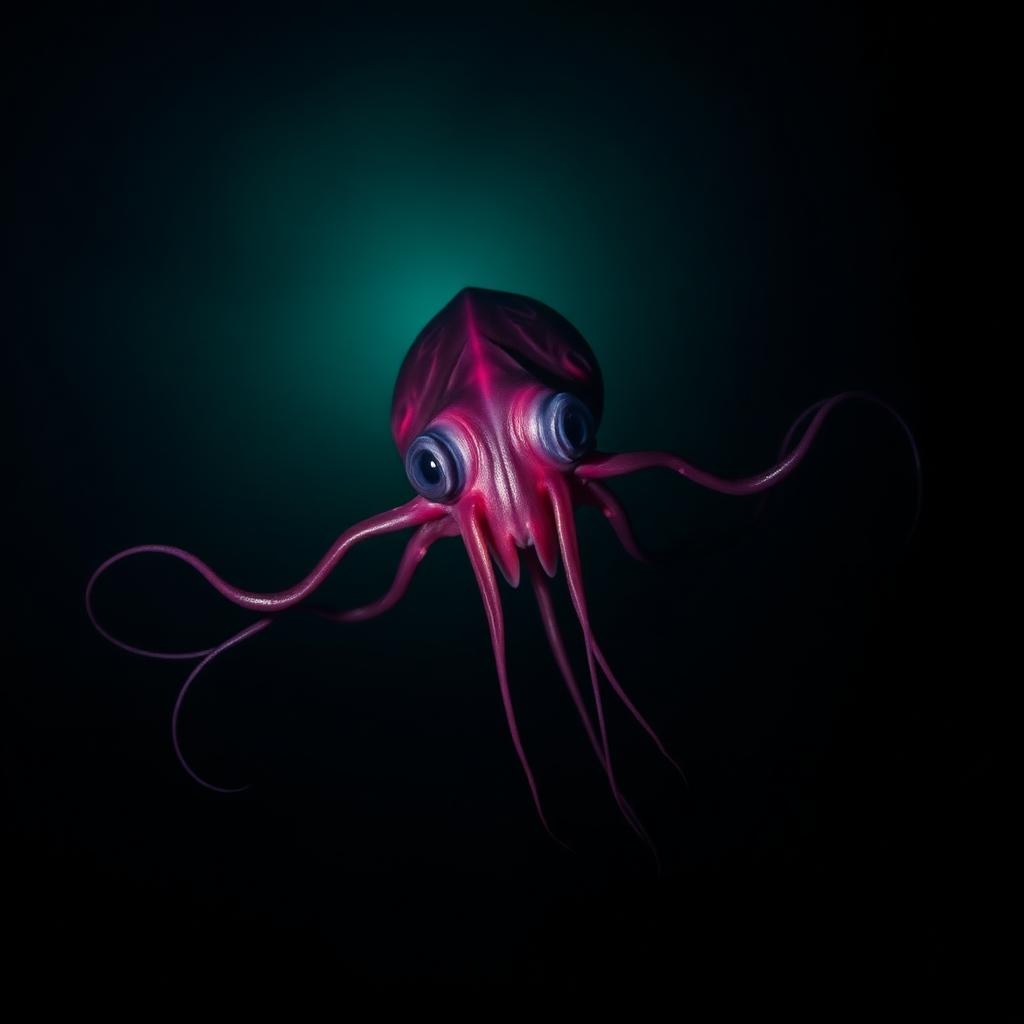
Vampyroteuthis infernalis: The Cephalopod That Is Neither Squid Nor Octopus
A gentle detritivore that has survived nearly unchanged for hundreds of millions of years
 Deep Sea Species Gallery
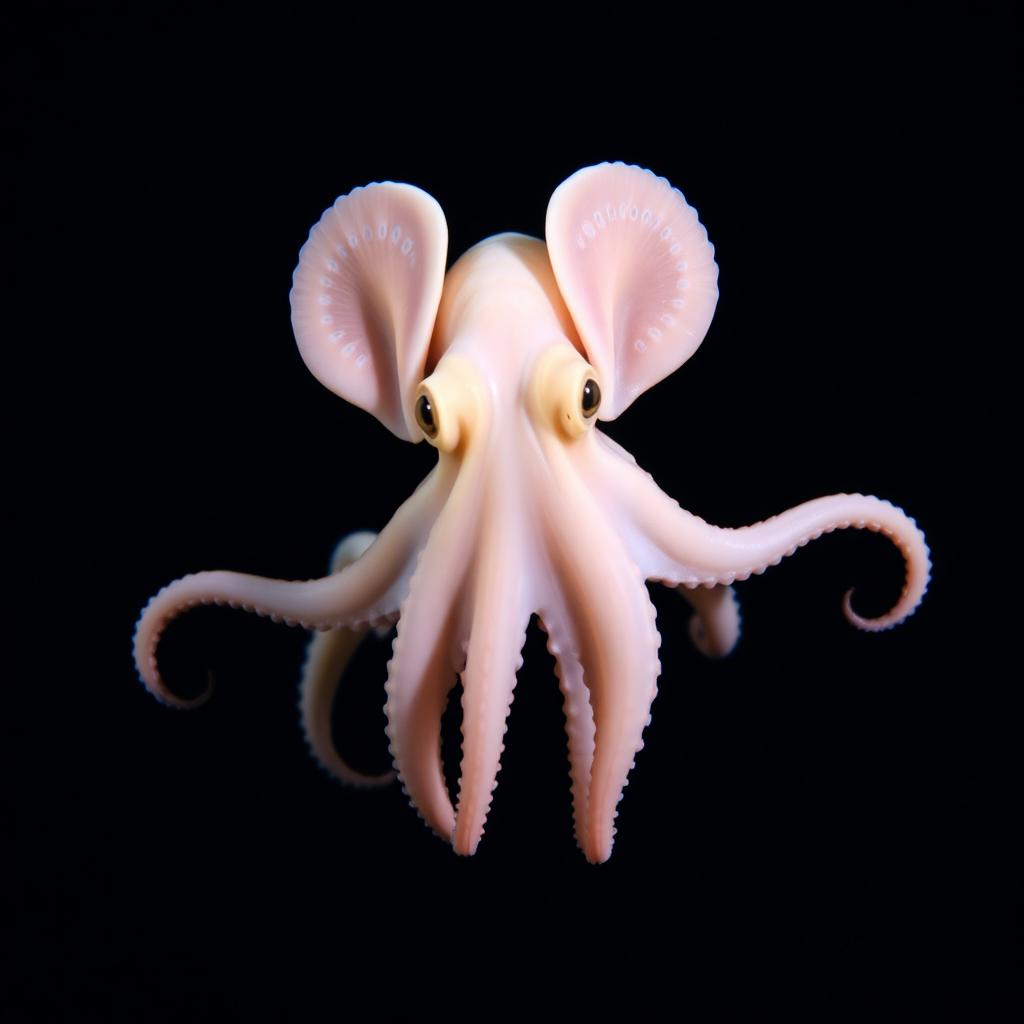
Dumbo Octopus: The Deep's Gentle Wanderer
Grimpoteuthis species that flap through the abyss on ear-like fins
 Deep Sea Species Gallery
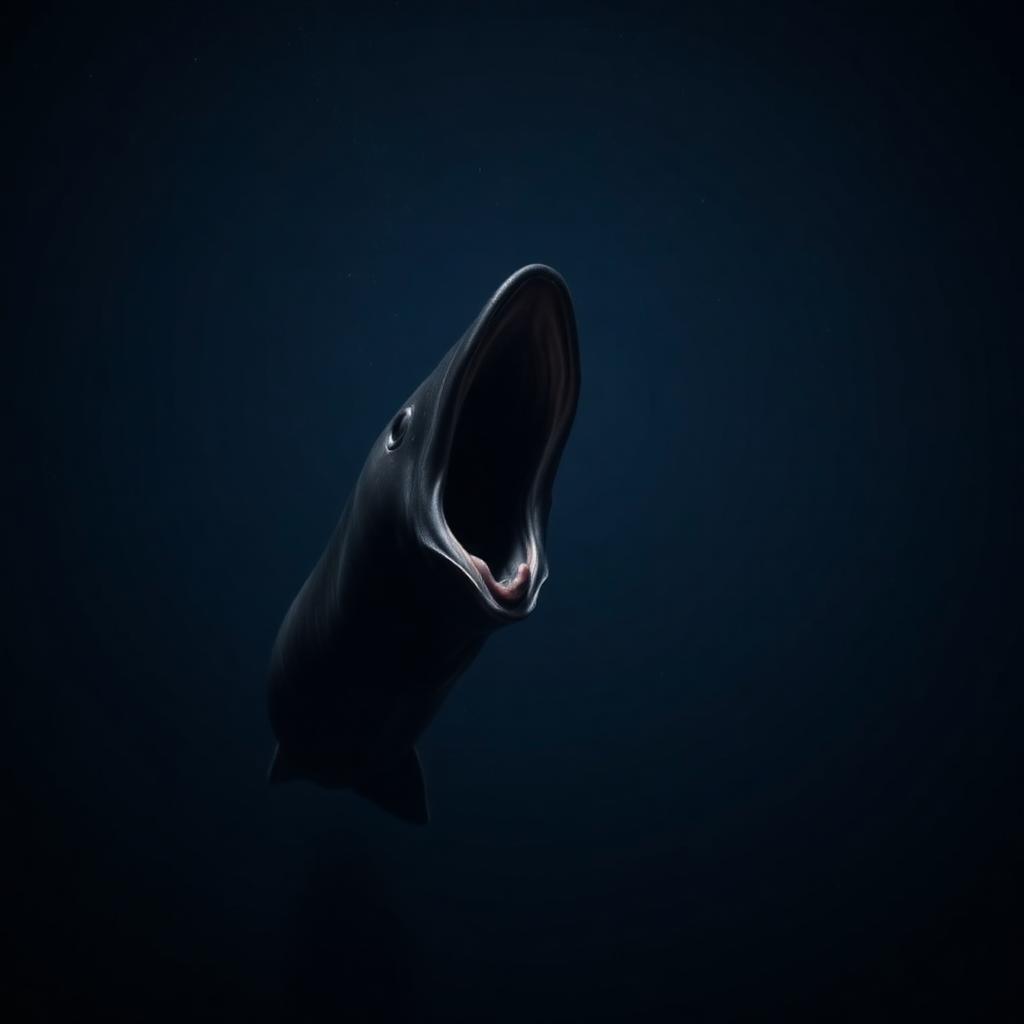
Gulper Eel: A Living Fishing Net
Eurypharynx pelecanoides and the anatomy of extreme swallowing