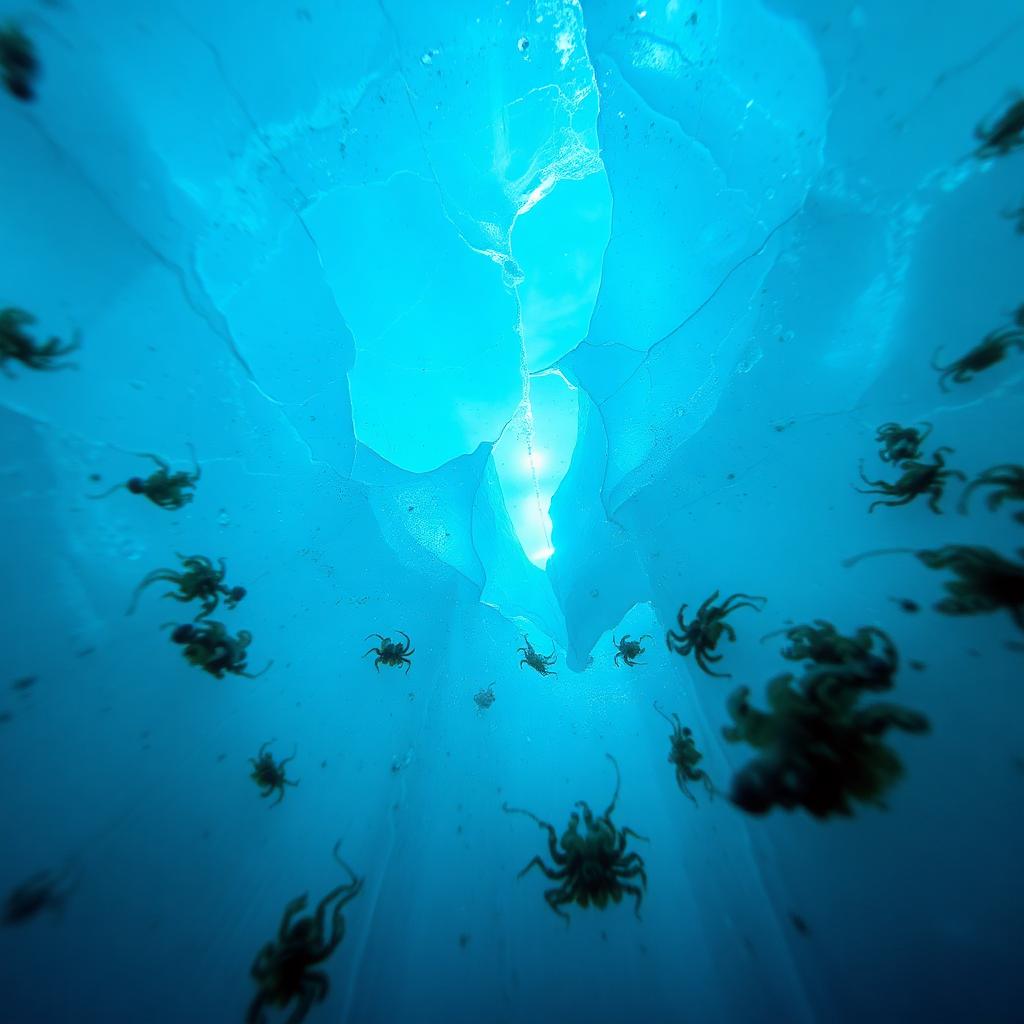
Under-Ice Deep Communities of the Polar Oceans
Life below sea ice reveals unexpected productivity and diversity
Polar oceans are often imagined as inhospitable, especially in winter when sea ice covers vast areas. Beneath the ice, however, the water column and seafloor host active communities that combine strong seasonal pulses of surface productivity with the slow, patient biology characteristic of the deep sea. Recent under-ice surveys in the Arctic and Southern Oceans have revealed unexpected productivity and diversity at depths well below the reach of surface light.
In summer, algae growing on the underside of sea ice and in surface waters produce dense blooms of primary production. Much of this material eventually sinks, delivering large amounts of organic carbon to the seafloor over short periods. Benthic communities have adapted to this pulsed food supply, storing energy during good months and metabolizing slowly through the long, dark polar winter. This boom-and-bust pattern is much more pronounced than in tropical or temperate deep-sea environments.
The Arctic Ocean's deep basins host distinctive communities dominated by amphipods, isopods, sea spiders, and various fishes adapted to persistent cold. Some species, such as certain snailfishes and eelpouts, are essentially endemic to the region. Long-term monitoring programs at sites like the Fram Strait have documented shifts in community composition as sea ice cover declines, suggesting that even deep-sea species are responding to surface climate change.
The Southern Ocean, encircling Antarctica, contains extensive deep basins as well as shallower shelf and slope habitats. Benthic communities on the Antarctic shelf are famous for their high biomass and species richness, particularly in areas dominated by sponges, echinoderms, and colonial suspension feeders. Nearby deep basins support communities more typical of the general deep sea but with a distinctly Antarctic flavor, including several unique fish and invertebrate lineages.
Both polar oceans face rapid change. Arctic sea ice extent has declined dramatically over recent decades, and thinning ice allows more light to penetrate, altering seasonal patterns. Freshwater input from melting ice affects density stratification, potentially changing how organic material sinks. In the Southern Ocean, changes in ice shelf stability and iceberg calving directly impact benthic communities through scouring and freshwater pulses.
Fisheries add another pressure. Some polar deep-water species, such as toothfish and certain shrimp, support significant commercial fisheries. Their slow growth and long lives make sustainable management challenging. International bodies like the Commission for the Conservation of Antarctic Marine Living Resources have developed precautionary approaches that have generally worked well, though implementation across national jurisdictions varies.
Scientific access to polar deep environments is difficult and expensive. Ice-strengthened research vessels, specialized moorings, and increasingly autonomous under-ice vehicles are all required. Long-term monitoring stations, such as those at the Fram Strait and Ross Sea, provide invaluable baseline data but are costly to maintain. International cooperation is essential for making the most of limited resources and ensuring consistent long-term records.
For a broader audience, polar under-ice communities illustrate how life adapts to extreme seasonality and cold. They are neither the fastest nor the most diverse ecosystems on Earth, but their responses to environmental change offer early warnings for broader ocean shifts. Understanding them is essential for anyone interested in how polar and deep-sea systems will evolve in the coming decades.
Deep polar waters are not lifeless deserts. Under-ice ecosystems combine seasonal pulses with long, slow lives in ways unique to the coldest oceans.
Continue reading
 Deep Sea Creatures Popular Science
Life in the Midnight Zone: A Field Guide to the Bathypelagic
How animals survive between 1,000 and 4,000 meters of perpetual darkness
 Deep Sea Creatures Popular Science
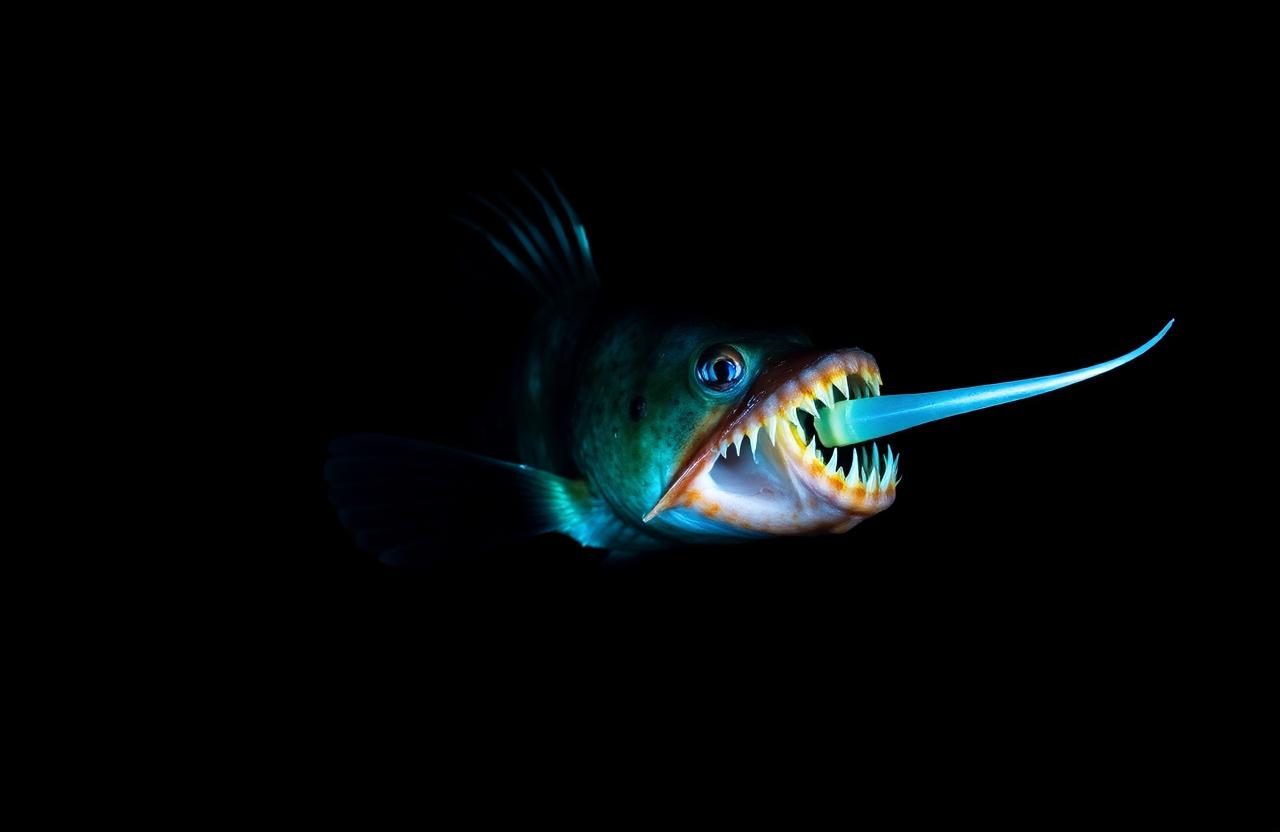
The Anglerfish's Lantern: Anatomy of a Deep-Sea Ambush Predator
How ceratioid anglerfishes evolved bacterial lures, extreme jaws, and parasitic males
 Deep Sea Creatures Popular Science
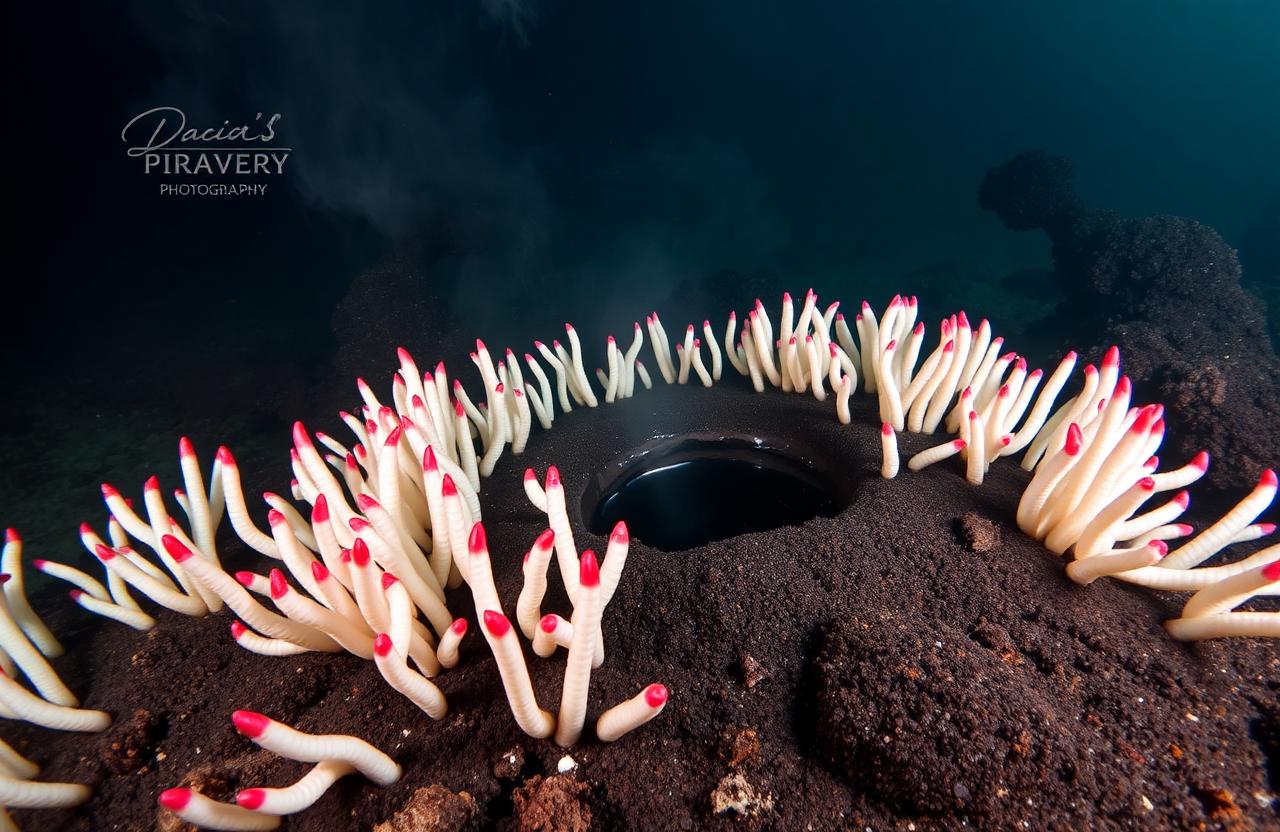
Hydrothermal Vents: Chemosynthesis and the Origins of Life
Superheated fluid, tube worms, and a food web that does not need the sun