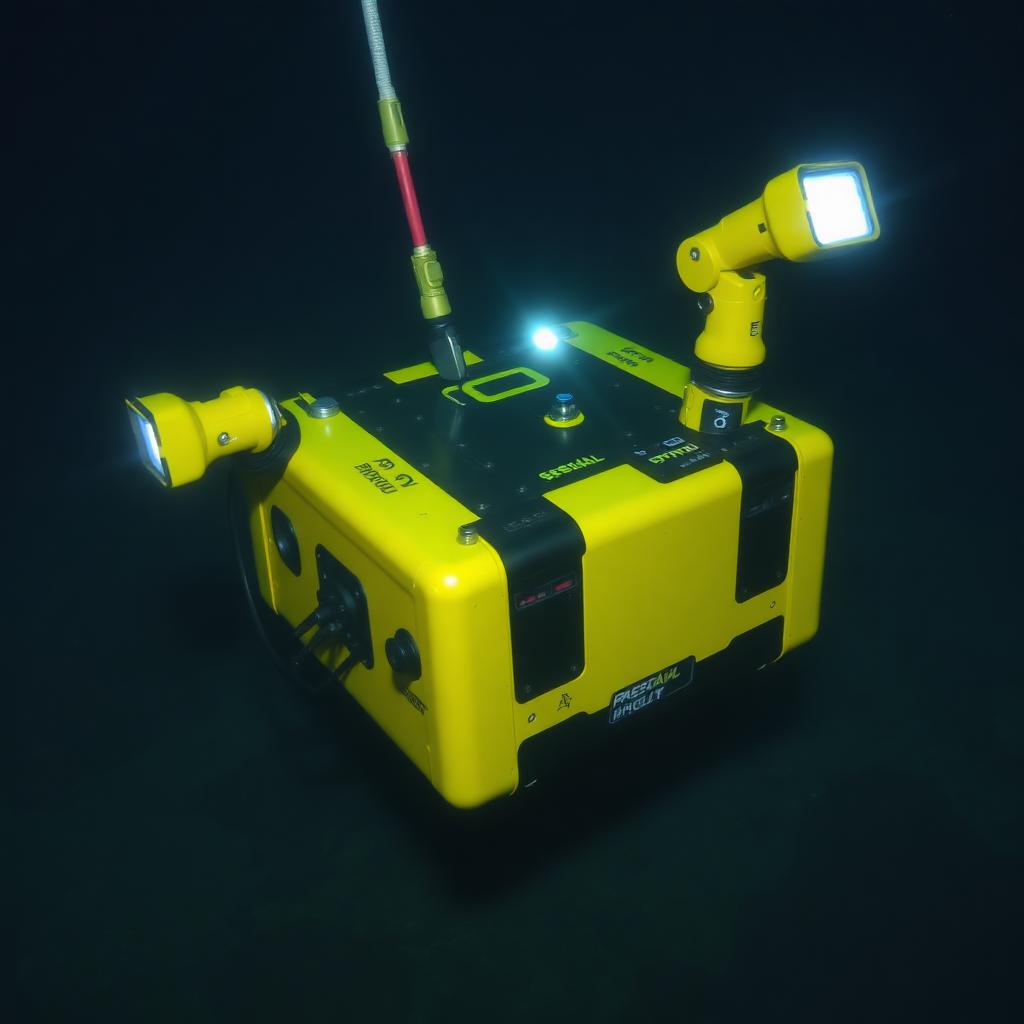
A Review of Remotely Operated Vehicles for Deep-Sea Research
How tethered robots became the workhorses of modern deep-sea science
Remotely operated vehicles, or ROVs, have become the primary tool for deep-sea science over the past three decades. Tethered to a surface ship by a cable that supplies power and carries data, an ROV can spend many hours at depth, transmit high-resolution video in real time, and manipulate objects on the seafloor with a level of precision that autonomous vehicles cannot yet match. Nearly every major deep-sea program now depends on ROVs for at least some of its work.
ROV designs vary widely. Work-class vehicles used in oil and gas industries are large, powerful, and capable of heavy manipulation. Scientific ROVs range from small, agile inspection-class systems to specialized platforms designed for specific tasks such as sediment coring or high-resolution photogrammetry. Each design reflects trade-offs among depth capability, maneuverability, payload capacity, and cost.
The tether is both a strength and a limitation. It provides essentially unlimited power and bandwidth, enabling continuous high-definition video, precise navigation, and complex tool use. However, it also constrains where the vehicle can go, requires careful management to avoid entanglement, and limits mission duration to hours or days rather than weeks. Untethered autonomous vehicles complement ROVs by covering larger areas or working in complex terrain but sacrifice real-time control and communication.
Manipulator arms are a defining feature of scientific ROVs. Modern systems include multiple articulated arms with interchangeable end effectors, allowing pilots to collect specimens, deploy instruments, adjust experimental setups, and even perform simple mechanical repairs. Skilled pilots can perform delicate operations, such as picking up small invertebrates without damaging them, that would have seemed impossible a generation ago.
Data handling has become a major challenge. A single ROV dive can produce terabytes of video and sensor data. Storing, cataloging, and analyzing this material requires significant computational resources and increasingly automated processing pipelines. Machine learning tools for species identification, event detection, and change monitoring are becoming standard components of modern data workflows.
Cost is a persistent constraint. Operating an ROV from a research vessel typically costs tens to hundreds of thousands of dollars per day, depending on vehicle capability and location. Access to shared national facilities, such as the American ROV Jason or the Japanese Kaiko system, is competitive and requires long lead times for planning. International collaborations and shared-use agreements help maximize the scientific return on limited assets.
New developments include hybrid ROV/AUV designs that can operate both tethered and untethered, higher-resolution imaging systems, and improved automation of routine tasks. Some vehicles now incorporate machine learning capabilities that allow them to identify and track objects semi-autonomously, reducing pilot workload during long dives. These advances are gradually expanding what ROVs can accomplish per unit time and per unit cost.
For the deep-sea community, ROVs are indispensable but not sufficient. Combining them with autonomous vehicles, crewed submersibles, long-term observatories, and shipboard sampling provides the fullest picture of any given region. Investing in this integrated approach, rather than favoring any single platform, is the most reliable path to continued progress in deep-sea science.
Remotely operated vehicles have transformed deep-sea research. Their design, capabilities, and limitations shape what science is possible.
Continue reading
 Deep Sea Research Review
How Climate Change Reaches the Deep Ocean
Warming, deoxygenation, and acidification below the surface
 Deep Sea Research Review
A Review of Abyssal Fish Diversity Across Ocean Basins
How different basins support different abyssal fish communities
 Deep Sea Research Review
Citizen Science Comes to the Deep Sea
How volunteer image classification is accelerating deep-sea discovery