A Review of Abyssal Fish Diversity Across Ocean Basins
How different basins support different abyssal fish communities
The abyssal zone, extending from about three thousand to six thousand meters, hosts fewer fish species than shallower zones but still supports substantial diversity. A recent review integrating trawl data, baited-camera surveys, and molecular studies across the Atlantic, Pacific, Indian, and Southern Oceans compared community composition and identified patterns that reflect both physical connectivity between basins and the long evolutionary history of each region.
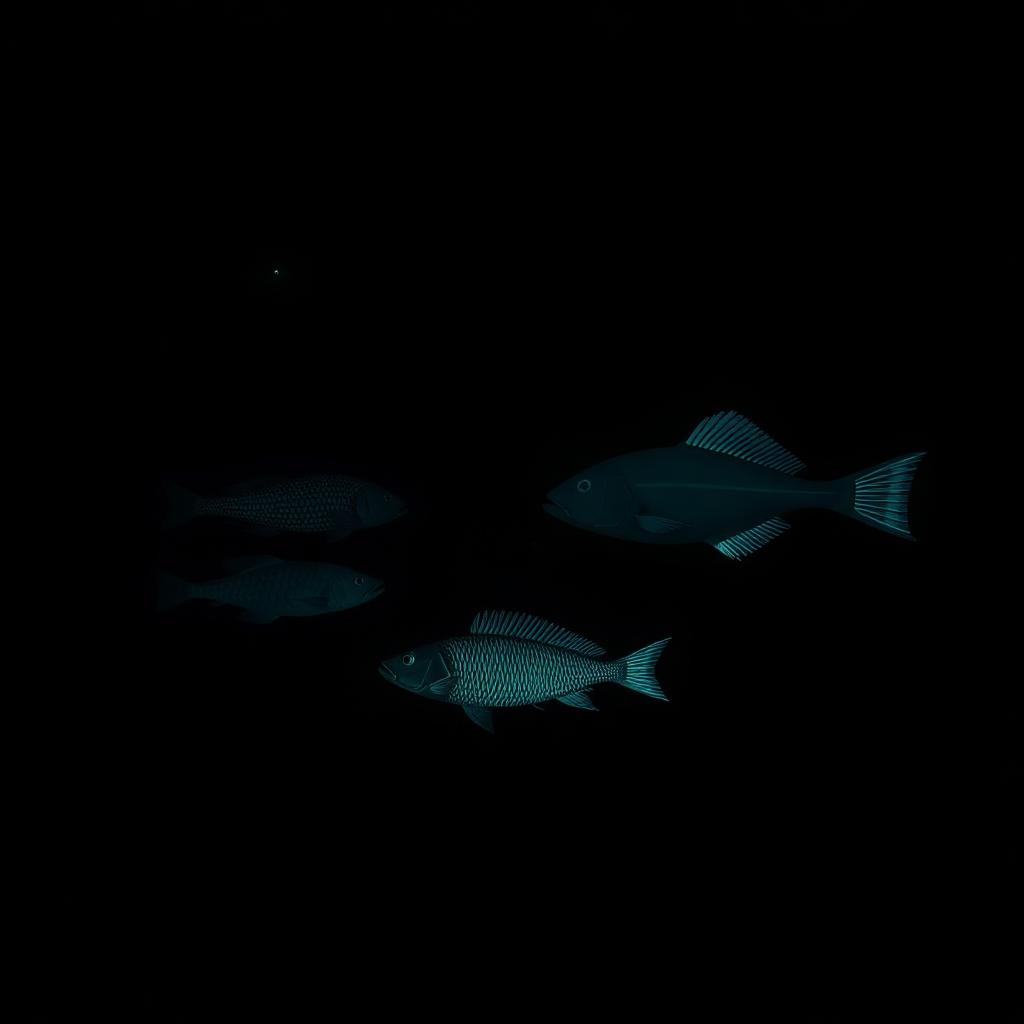
Grenadiers, or macrourids, dominate many abyssal communities. Species in the genera Coryphaenoides and related lineages appear at high abundance across all major basins and often occupy overlapping ecological roles as slow scavengers and predators of smaller invertebrates. Cusk eels, tripodfishes, and various snailfish species round out the most consistently observed groups. Together they account for the majority of biomass on many abyssal transects.
Basin-level differences emerge in several dimensions. The Southern Ocean supports notothenioid-derived fishes that are absent from other basins, a legacy of Antarctic isolation and radiation over tens of millions of years. Certain abyssal snailfish lineages appear to have diversified independently within different trench and abyssal regions, producing sister species in geographically separated basins. The Indian Ocean, historically undersampled, contains apparent gaps in the record that likely reflect limited survey effort rather than genuine absence of fishes.
Molecular studies have added nuance to older morphology-based classifications. Several species once thought to be widespread turn out to consist of multiple cryptic species with restricted ranges. Others thought to be geographically distinct show high genetic connectivity across surprisingly wide areas, likely because larval or juvenile stages disperse in mid-water currents before settling to depth. Combining morphology, environmental DNA, and traditional taxonomy remains an active area of methodological refinement.
One striking pattern is the relative rarity of large predatory fishes at abyssal depths. While large sharks and teleosts dominate many shallower ecosystems, abyssal communities are populated mostly by fishes under a meter in length. This likely reflects the low energy availability at depth: a large-bodied fast predator would require food supply rates that abyssal environments simply cannot provide. The exception is opportunistic scavenging on large food falls, which can attract fishes from surprising distances within a short window of opportunity.
Deep-sea fisheries add a management dimension to this scientific picture. Grenadiers and related species have been targeted in some regions, and their slow growth and late maturation make them highly vulnerable to overfishing. Recovery times after depletion can span decades. Careful regulation, informed by realistic biology, is essential to avoid repeating past mistakes in which fisheries collapsed shortly after peaking.
The review also highlights sampling biases that continue to distort our understanding. Baited cameras attract scavengers but miss ambush predators and non-scavenging species. Trawls damage soft-bodied fishes and often fail in rugged terrain. Genetic surveys rely on reference databases that are still incomplete for many abyssal groups. Comparing results across methods and communicating uncertainty honestly is a persistent challenge.
For general readers, the takeaway is that abyssal fish diversity, while modest compared to shallow reefs, is real and shaped by geography, history, and physiology. Different oceans do not host the same communities. Each basin carries its own evolutionary legacy, and understanding these differences is essential for both scientific insight and effective conservation.
Abyssal fish communities differ between ocean basins in ways that reflect both physical connectivity and evolutionary history.
Continue reading
 Deep Sea Research Review
How Climate Change Reaches the Deep Ocean
Warming, deoxygenation, and acidification below the surface
 Deep Sea Research Review
Citizen Science Comes to the Deep Sea
How volunteer image classification is accelerating deep-sea discovery
 Deep Sea Research Review
Tubeworm Symbiosis and the Evolution of Chemoautotrophy
How Riftia and its relatives illuminate a fundamental mode of life