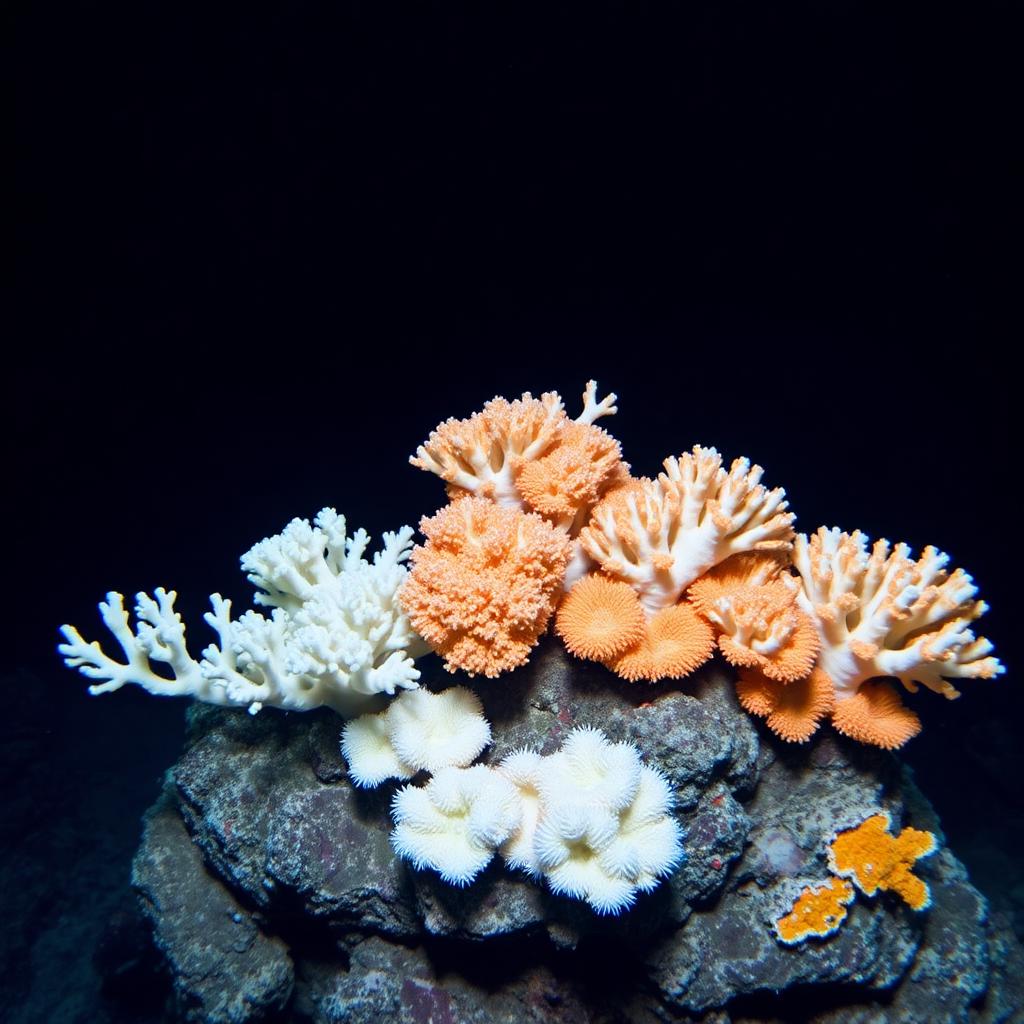
Cold Water Coral Gardens of the Deep
How Lophelia and other deep corals build reefs without sunlight
Cold-water corals are among the most important ecosystem engineers of the deep sea. Unlike tropical reef-building corals, they do not rely on photosynthetic symbionts and can thrive in cold, dark waters hundreds or thousands of meters below the surface. Species such as Lophelia pertusa and Solenosmilia variabilis form dense colonies that gradually build up into reef-like structures over thousands of years.
These reefs are typically found on continental slopes, seamounts, and canyon walls where currents deliver a steady supply of suspended organic material. The corals filter this material using extended polyps and mucus nets. Their skeletons, made of calcium carbonate, accumulate over generations to form complex three-dimensional structures that provide habitat for a wide range of other species.
The biodiversity supported by cold-water coral reefs is remarkable. Sponges, brittle stars, crinoids, deep-sea fishes, and many species of crustaceans use the reef structure for shelter, feeding, and reproduction. Some commercially important fish species use coral reefs as nursery areas, adding an economic dimension to the ecological importance of these habitats.
Discovering cold-water coral reefs has been a slow process. Early evidence came from fishermen who occasionally pulled up chunks of coral in their nets. Systematic mapping using multibeam sonar and ROV surveys over the past three decades has revealed that these reefs are far more widespread than previously imagined. Major reef systems have been documented in the North Atlantic, off the coast of Norway, in the Mediterranean, and around New Zealand.
Threats to cold-water coral ecosystems come from several directions. Bottom trawling has caused severe damage to reefs in many regions, breaking up structures that took millennia to form. Ocean acidification, driven by increased atmospheric carbon dioxide, threatens the ability of corals to build their calcium carbonate skeletons. Climate-driven changes in currents and food supply add further uncertainty about long-term reef health.
Conservation efforts have led to the establishment of marine protected areas in several regions where cold-water coral reefs are known to occur. Norway, Ireland, and the United Kingdom have designated protected zones around major reef complexes. Similar efforts are underway in other regions, though enforcement in remote deep-sea areas remains challenging.
Research on cold-water coral reproduction has revealed important vulnerabilities. Many species reproduce infrequently and their larvae disperse only over relatively short distances. This means that reefs, once destroyed, may not be repopulated for very long periods. Understanding these reproductive dynamics is essential for designing effective protection strategies.
For readers curious about the diversity of deep-sea habitats, cold-water coral gardens offer a striking contrast to the popular image of the abyss as a barren, monotonous plain. These are structured, colorful, biologically rich communities that quietly build complex worlds in some of the coldest and darkest waters on the planet.
Cold-water corals build complex reef structures in cold, deep, dark water. They support rich communities and are increasingly recognized as globally important habitats.
Continue reading
 Deep Sea Creatures Popular Science
Life in the Midnight Zone: A Field Guide to the Bathypelagic
How animals survive between 1,000 and 4,000 meters of perpetual darkness
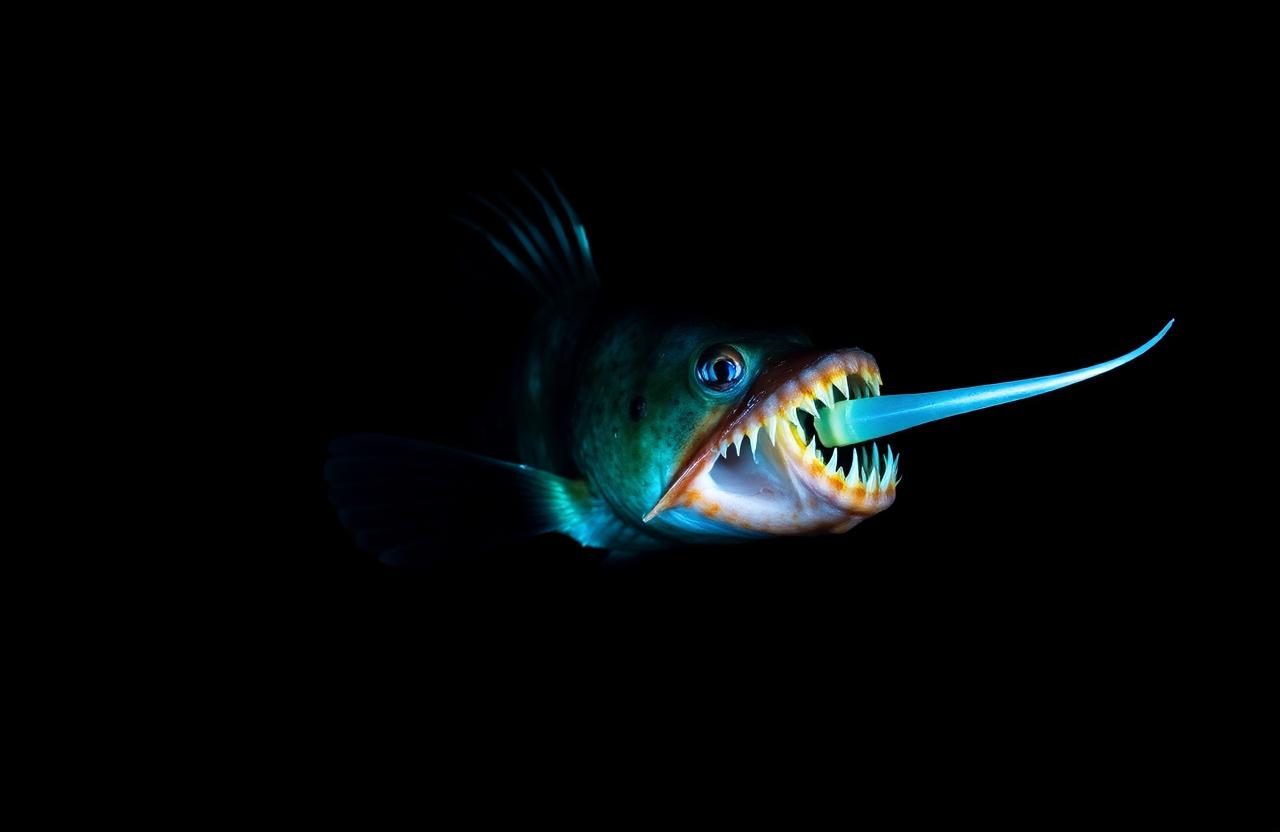 Deep Sea Creatures Popular Science
The Anglerfish's Lantern: Anatomy of a Deep-Sea Ambush Predator
How ceratioid anglerfishes evolved bacterial lures, extreme jaws, and parasitic males
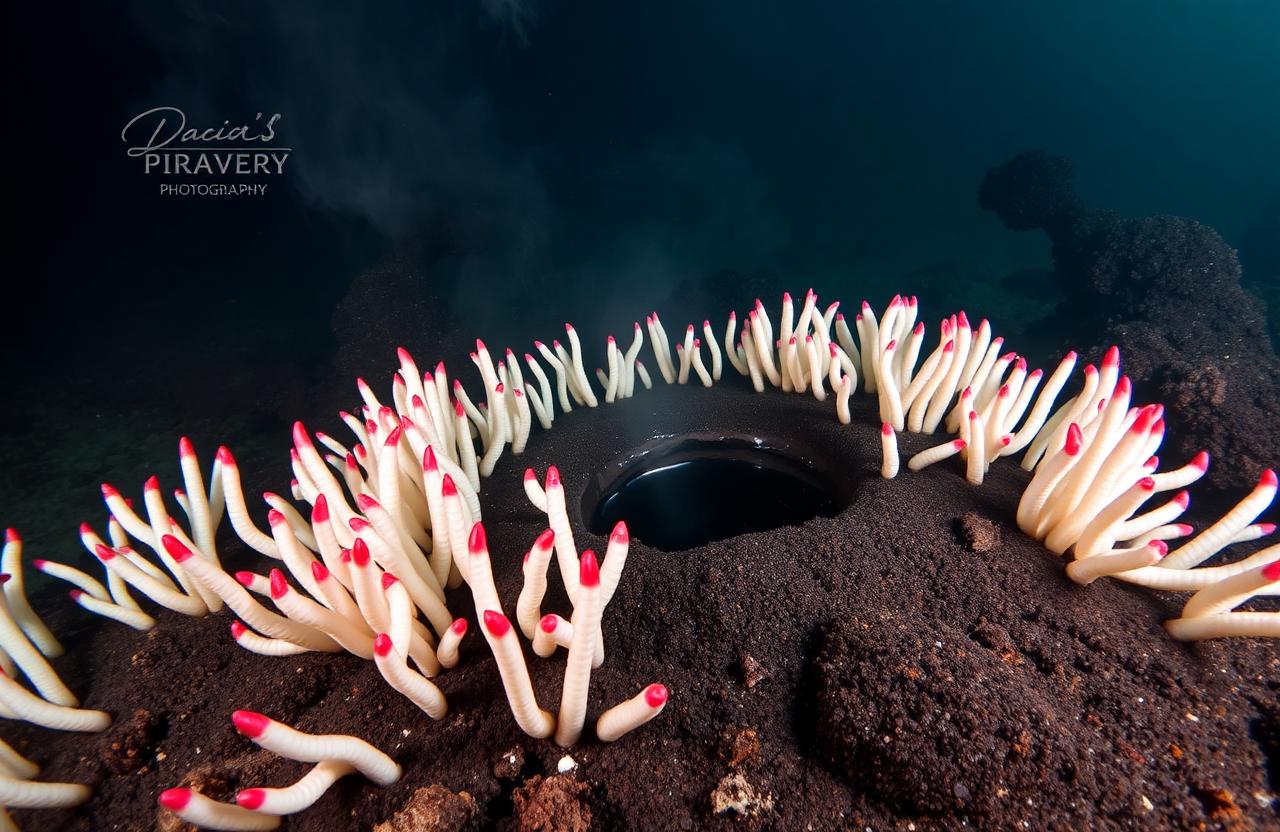 Deep Sea Creatures Popular Science
Hydrothermal Vents: Chemosynthesis and the Origins of Life
Superheated fluid, tube worms, and a food web that does not need the sun