Brine Pools: The Underwater Lakes of the Gulf of Mexico
How dense salty water forms lakes beneath the ocean and shapes the life around them
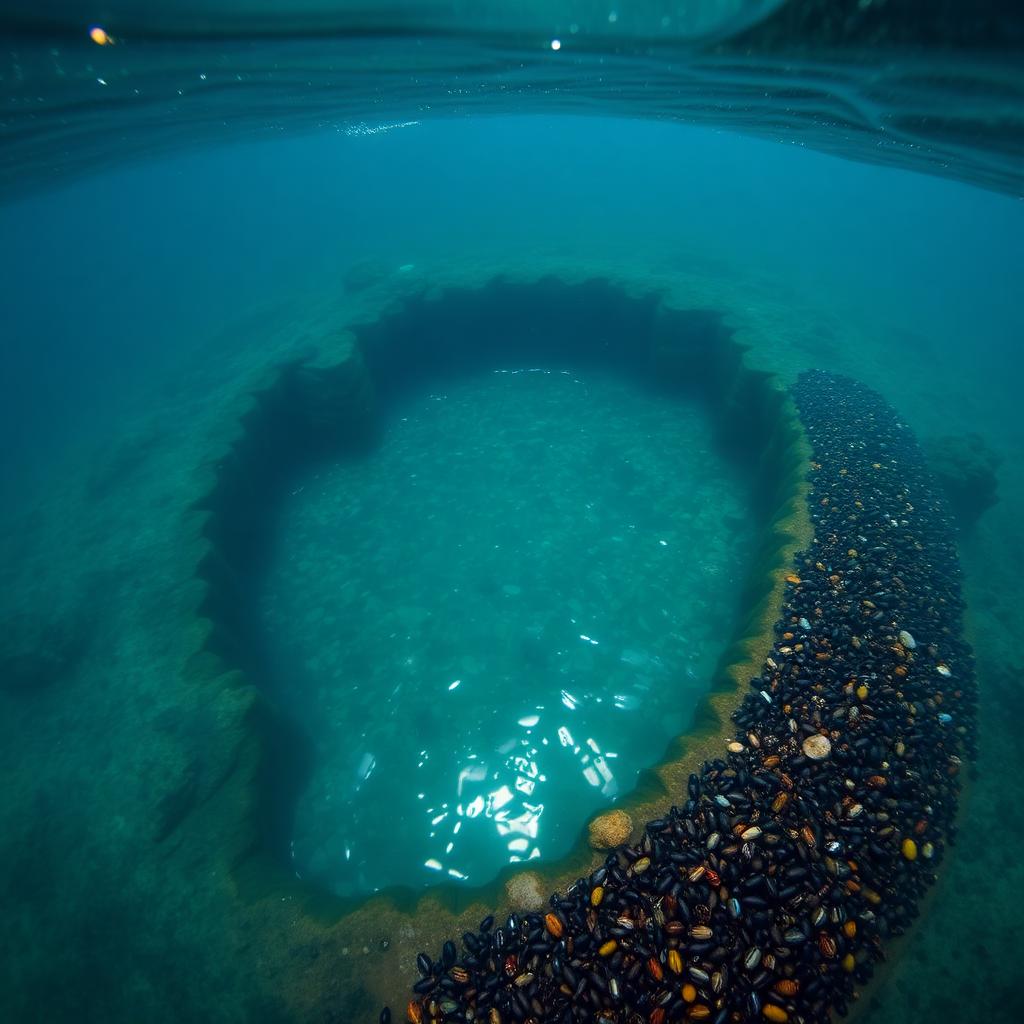
Brine pools are among the most alien features of the deep-sea floor. They form when ancient salt deposits beneath the seabed dissolve and seep upward, creating water that is several times saltier than the surrounding ocean. Because this brine is denser than normal seawater, it collects in depressions on the seafloor and forms a distinct underwater lake, complete with its own shoreline, waves, and reflective surface.
The Gulf of Mexico is famous for its brine pools, which are found at depths from about six hundred to two thousand meters. Some are just a few meters across, while others cover the area of several football fields. The water inside these pools is so salty and low in oxygen that most fishes and invertebrates that swim into it die within minutes. Preserved bodies of unfortunate crabs and small fishes often ring the edges, a striking reminder of the pool's toxicity.
Around the shores of brine pools, dense communities of chemosynthetic organisms thrive. Beds of Bathymodiolus mussels host symbiotic bacteria that oxidize the methane and hydrogen sulfide seeping from the pool, converting these chemicals into the sugars the mussels need. Tubeworms and clams with similar bacterial partners often live nearby. These communities can be extraordinarily productive despite existing far from any sunlight.
Brine pool systems are important analogs for extreme environments elsewhere in the solar system. Their combination of high salinity, chemosynthetic energy sources, and stable long-term existence makes them useful for understanding how life might survive in subsurface oceans on moons such as Europa or Enceladus. Astrobiologists routinely study brine pool microbes for clues about the kinds of biochemistry that could persist in such environments.
Some brine pools are surrounded by mud volcanoes, gas hydrate deposits, and asphalt flows that create additional habitat structure. The interplay between hard substrates, chemical gradients, and biological communities produces some of the most complex ecosystems in the deep sea. Detailed mapping of these features requires high-resolution multibeam sonar combined with ROV surveys, and every well-studied site continues to reveal new species and interactions.
Because brine pools accumulate organic material and are geologically stable over long periods, they preserve unusual chemical and biological records. Sediment cores from around pool edges have been used to reconstruct thousands of years of local productivity, methane release, and community composition. This makes them valuable natural archives of deep-sea environmental history, in addition to being active ecosystems.
For visitors watching brine pool footage for the first time, the illusion of a lake at the bottom of the sea is unforgettable. Waves ripple across the surface as the ROV approaches, and dropped instruments float on top of the denser water. The scene feels like a violation of common intuition about how oceans should behave, yet it is a completely natural expression of the chemistry and geology of a deep, salt-rich basin.
Brine pools are dense, hypersaline lakes that form on the deep-sea floor. Their shores support rich chemosynthetic communities and their waters are lethal to most animals.
Continue reading
 Deep Sea Creatures Popular Science
Life in the Midnight Zone: A Field Guide to the Bathypelagic
How animals survive between 1,000 and 4,000 meters of perpetual darkness
 Deep Sea Creatures Popular Science
The Anglerfish's Lantern: Anatomy of a Deep-Sea Ambush Predator
How ceratioid anglerfishes evolved bacterial lures, extreme jaws, and parasitic males
 Deep Sea Creatures Popular Science
Hydrothermal Vents: Chemosynthesis and the Origins of Life
Superheated fluid, tube worms, and a food web that does not need the sun