The Barreleye Fish: A Transparent Head Full of Surprises
How Macropinna microstoma uses tubular eyes inside a see-through skull
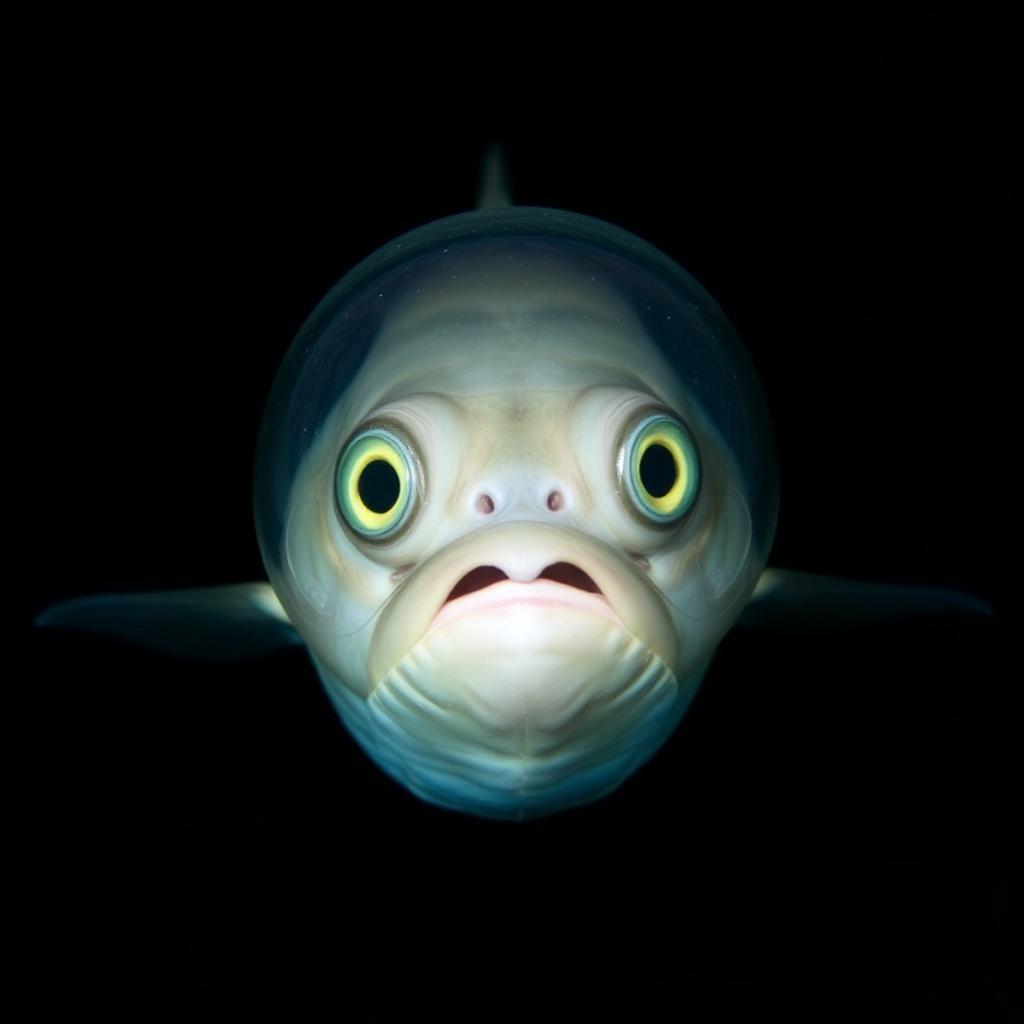
The barreleye fish, Macropinna microstoma, is one of the most photographed deep-sea species of the past two decades, largely because of a single remarkable image captured by the Monterey Bay Aquarium Research Institute. In that image, the fish's forehead is a fluid-filled transparent dome, and inside the dome sit two green, tubular eyes pointed straight upward. Nothing about the animal looks quite like a fish should.
Macropinna lives in the mesopelagic and upper bathypelagic zones of the North Pacific, typically at depths between six hundred and eight hundred meters. In this twilight layer, faint downwelling light from the surface still reaches the water column. Animals that hunt small prey silhouetted against that dim glow benefit from eyes that look straight up. The barreleye's tubular eyes are large, sensitive, and highly specialized for this exact task.
For years, scientists assumed that the upward-pointing eyes were locked in place, which would have made the fish's field of view very narrow. Later observations from ROV footage revealed something unexpected: the eyes can rotate forward inside the transparent dome, allowing the fish to look directly at prey it is about to grab with its small mouth. The transparent head, which was easily damaged in traditional net collections, had hidden this behavior from earlier researchers.
The two small dark spots on the front of the fish's head, which many observers mistake for eyes, are actually nostril-like olfactory organs. They give the animal a strong sense of smell that likely helps it locate scattered prey in the darkness. The real eyes remain safely enclosed inside the fluid-filled dome, protected from stinging tentacles of the siphonophores whose captured prey the barreleye is thought to steal.
Feeding on siphonophore captures is one of the more remarkable hypotheses about Macropinna's ecology. The fish's ability to hover motionless and its resistance to nematocyst stings suggest a lifestyle built around approaching gelatinous predators from below, spotting trapped prey silhouetted against the light, and darting up to snatch it. If confirmed, this behavior would make the barreleye a specialized kleptoparasite in a habitat where most animals struggle simply to find any food at all.
The barreleye is a strong reminder that deep-sea anatomy often makes no sense until it is observed in the wild. Preserved specimens looked like small, dull fishes with disproportionately large heads. Only high-quality video changed the story. The transparent dome, the rotating eyes, and the likely feeding strategy all emerged from observation rather than dissection.
For visitors of the deep-sea gallery, Macropinna microstoma is a perfect example of how alien our own planet can be. A fish with a see-through head, upward-pointing green eyes, and a habit of stealing from siphonophores would sound like fiction if it were not swimming through the North Pacific right now, quietly waiting for something small to drift past overhead.
The barreleye's transparent dome-shaped head hides upward-looking eyes that can rotate to track prey silhouettes overhead.
Continue reading
 Deep Sea Species Gallery
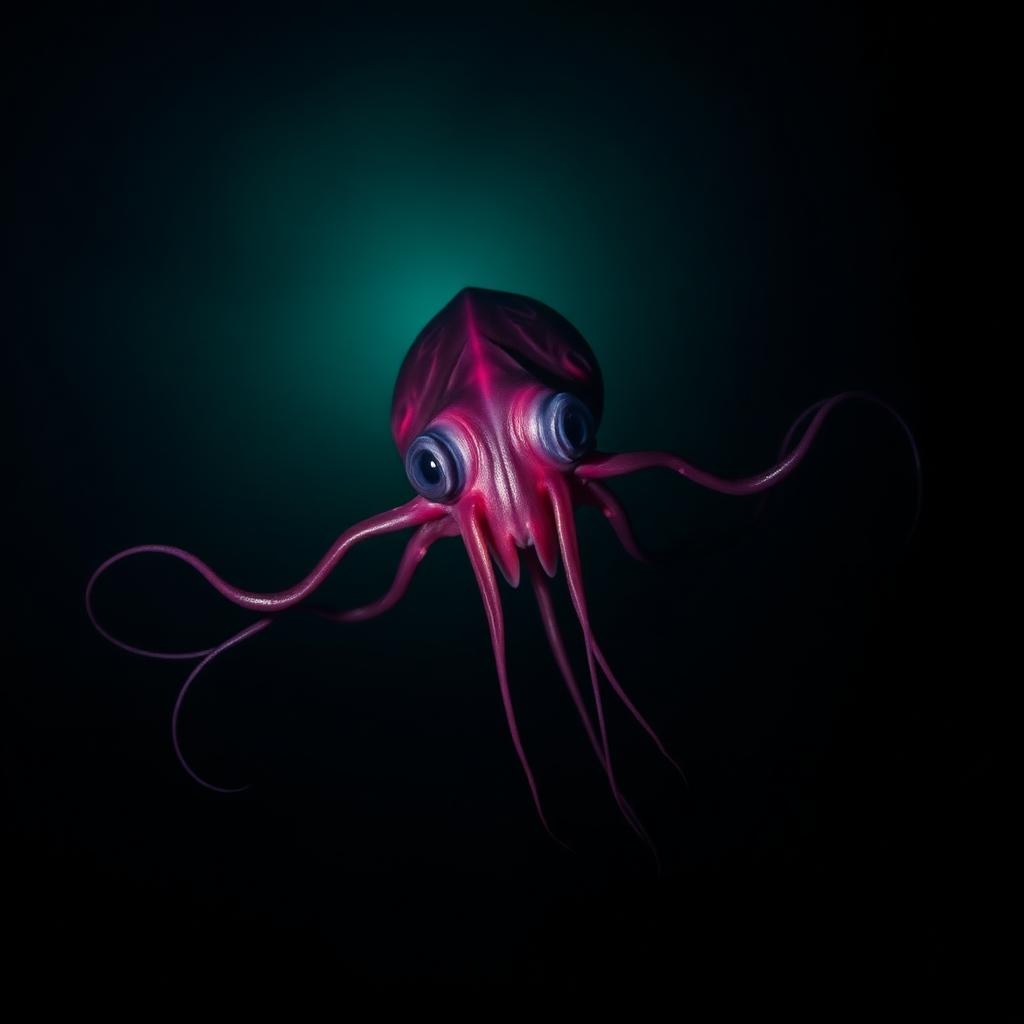
Vampyroteuthis infernalis: The Cephalopod That Is Neither Squid Nor Octopus
A gentle detritivore that has survived nearly unchanged for hundreds of millions of years
 Deep Sea Species Gallery
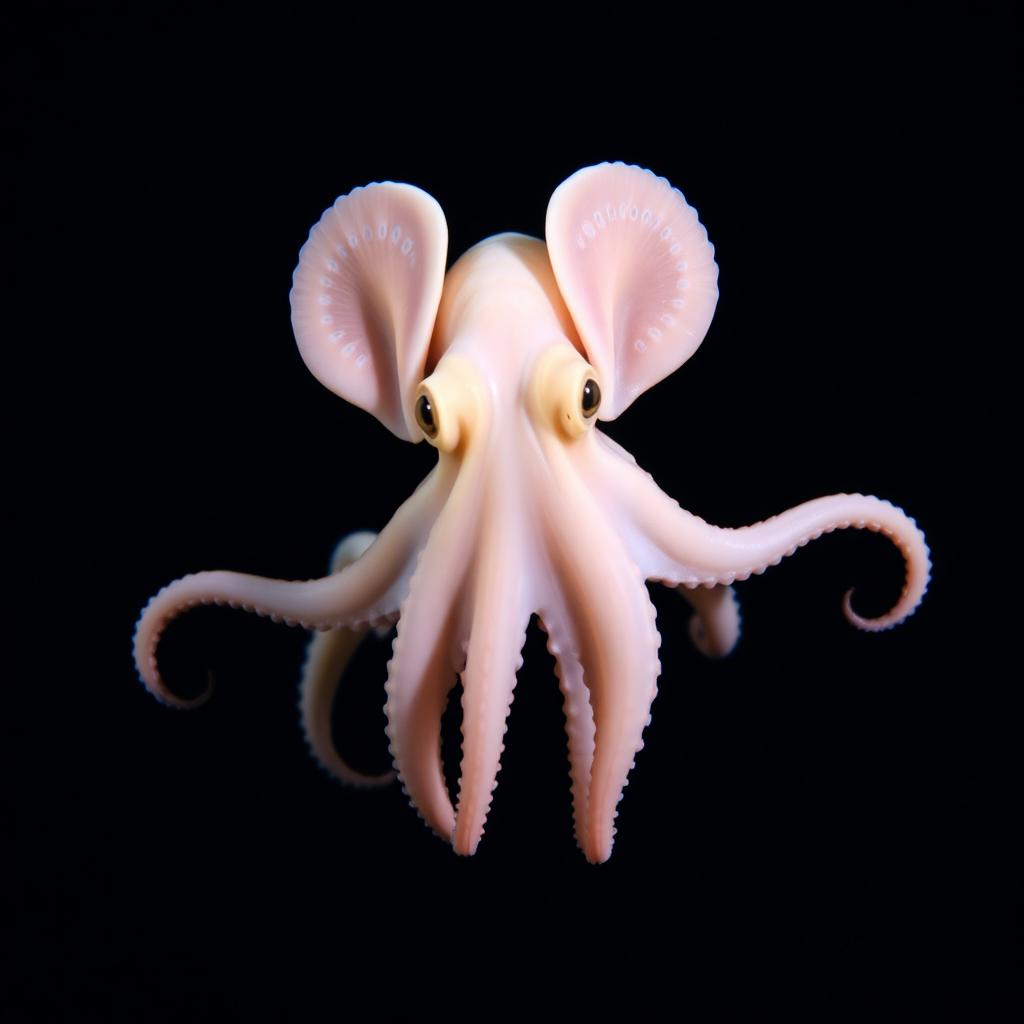
Dumbo Octopus: The Deep's Gentle Wanderer
Grimpoteuthis species that flap through the abyss on ear-like fins
 Deep Sea Species Gallery
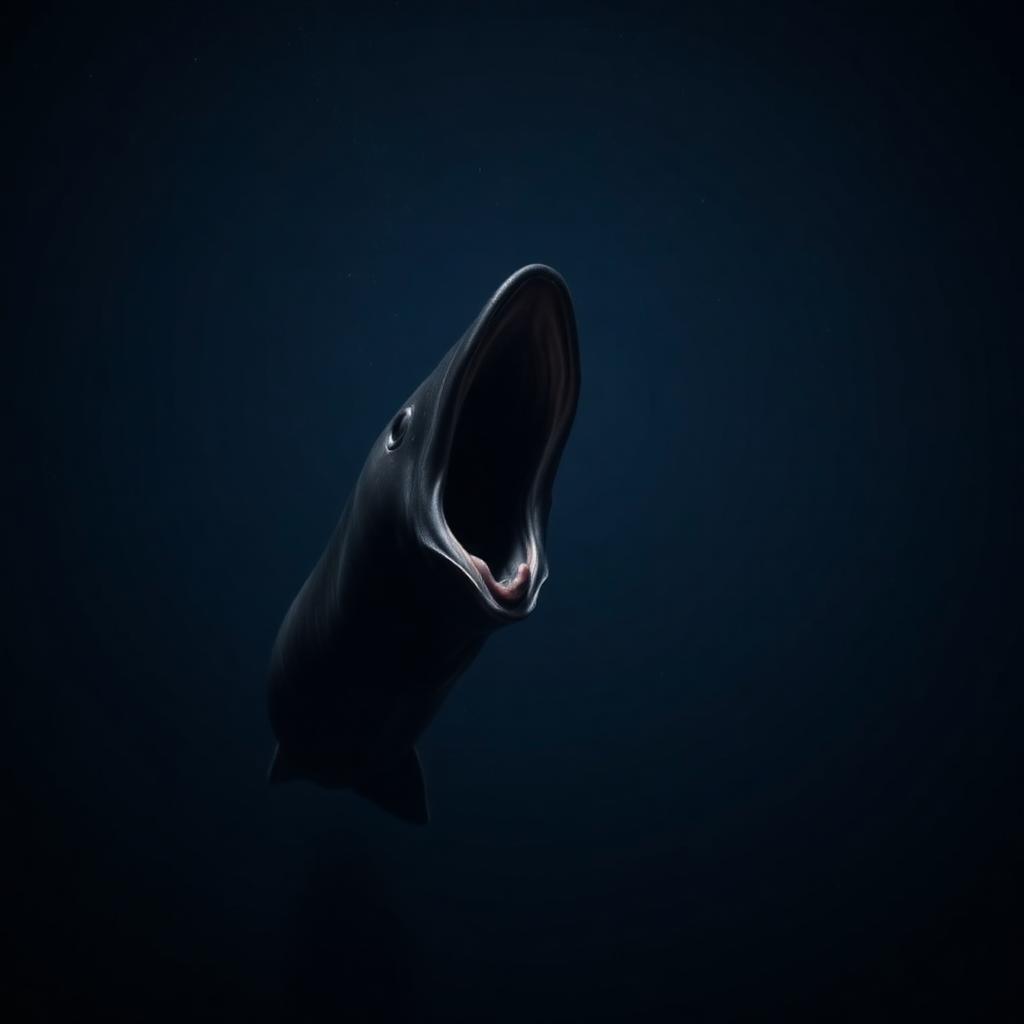
Gulper Eel: A Living Fishing Net
Eurypharynx pelecanoides and the anatomy of extreme swallowing